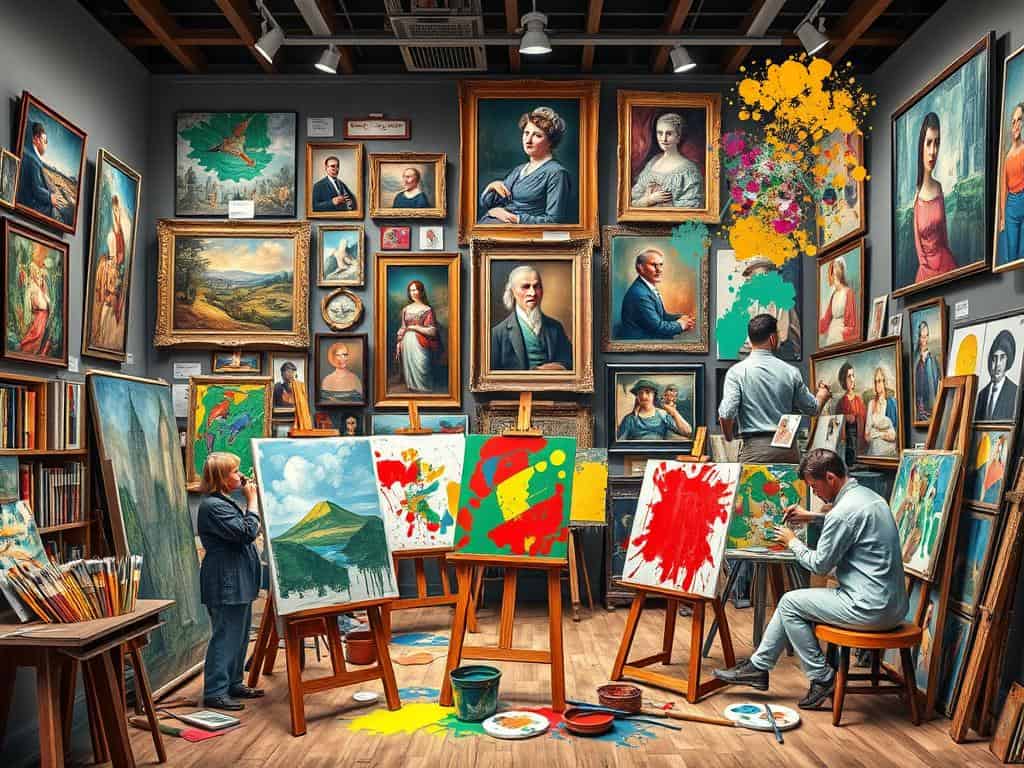
Exploring art, I often find something that really catches my eye. In a modern art museum, I learned about the stories behind each piece. Did you know cave paintings are thousands of years old and found in places like France and Namibia? These are some of the oldest signs of human creativity.
Today, artists like Willard Wigan make tiny ‘micro-sculptures’ that need a microscope to see. These extremes show the wide range of art history. Each art movement pushed boundaries and changed how we see art.
Impressionism brought us the beauty of the moment, while Cubism showed us new ways to see. Each movement tells us about the culture of its time. It shows how society’s changes influenced art.
By looking at these art periods and the stories of famous paintings, we can learn a lot. Join me as we discover some amazing facts about these movements that changed the art world.
Key Takeaways
- Cave paintings are ancient expressions of human creativity, located in several countries.
- Willard Wigan creates stunning micro-sculptures visible only under a microscope.
- Famous artists have unique pets that inspired their works, like Frida Kahlo’s spider monkeys.
- The Mona Lisa receives countless love letters, with her very own mailbox located in the Louvre.
- Artistic movements like Impressionism and Cubism significantly impacted cultural history and artistry.
Exploring Major Art Movements
Art reflects society, showing the spirit of each time. Impressionism and Cubism changed modern art. They introduced new ways to create art, influencing many artists.
The Birth of Impressionism
Impressionism started in the mid-19th century. Artists like Claude Monet and Edgar Degas focused on light and color. They used bold strokes and bright colors, moving away from traditional art.
This change was big in art history. It set the stage for future art and inspired many.
The Rise of Cubism
In the 20th century, Cubism came along. Pablo Picasso and Georges Braque led this movement. They showed objects in geometric shapes, changing how we see art.
This led to abstract art, a key part of modern art. It greatly influenced artists in many fields.
Art History Fun Facts: Unveiling Intrigues Behind Iconic Paintings
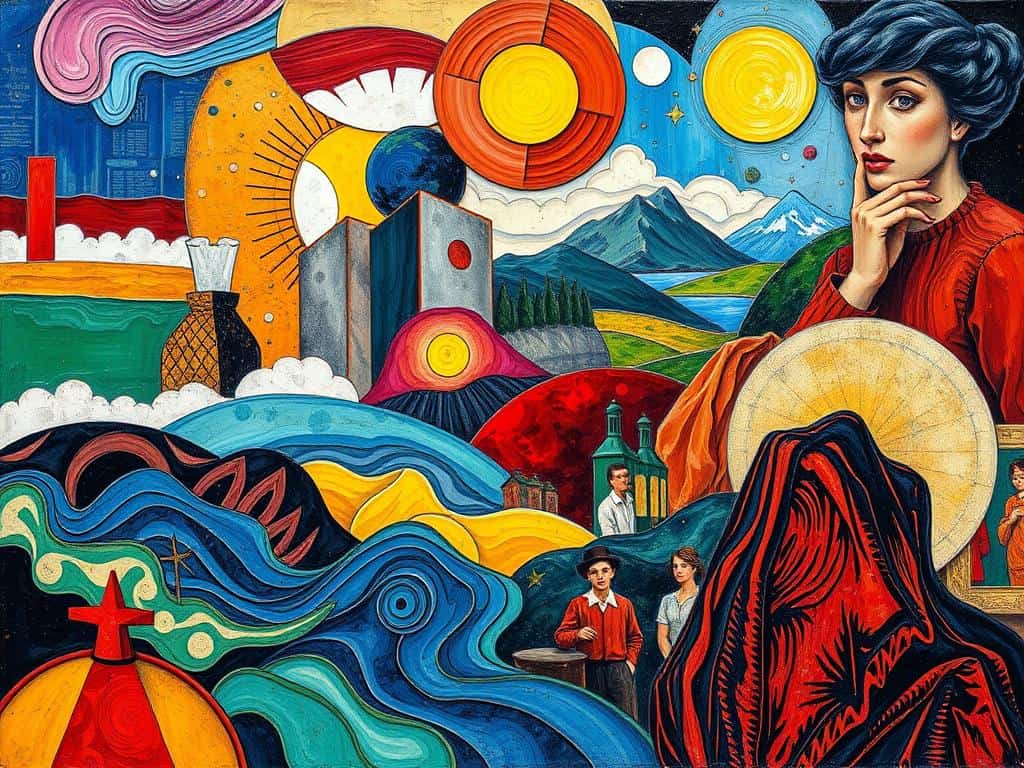
Art movements show us how society and creativity change over time. By looking at Symbolism, Dada, and Surrealism, we can better understand famous paintings and their backgrounds. These movements changed how artists saw the world and inspired others to come.
Symbolism’s Mystical References
Symbolism came after Impressionism, focusing on the mysterious and emotional in art. Artists like Gustave Moreau and Odilon Redon used symbols to stir feelings and share deeper meanings. They broke new ground, leading to Expressionism and more.
These fun facts show how Symbolists aimed to share ideas that can’t be seen or touched. They went beyond just showing things.
Dada’s Rebellion Against Tradition
Dada started after World War I, as a reaction to the chaos. It celebrated the strange and the ironic, rejecting old ways that led to war. Artists like Marcel Duchamp and Hannah Höch made works that challenged norms and what art should be.
Duchamp’s “Fountain” is a prime example, turning a simple object into art just by saying it was. Dada shows how art can criticize society.
Surrealism and the Unconscious Mind
Surrealism took Dada’s ideas further, exploring dreams and the subconscious. Artists like Salvador Dalí and René Magritte mixed reality with fantasy, making us think about our own minds. Dalí’s “The Persistence of Memory” with melting clocks makes us question time itself.
Surrealism didn’t just change art; it also influenced psychology and culture.
Conclusion
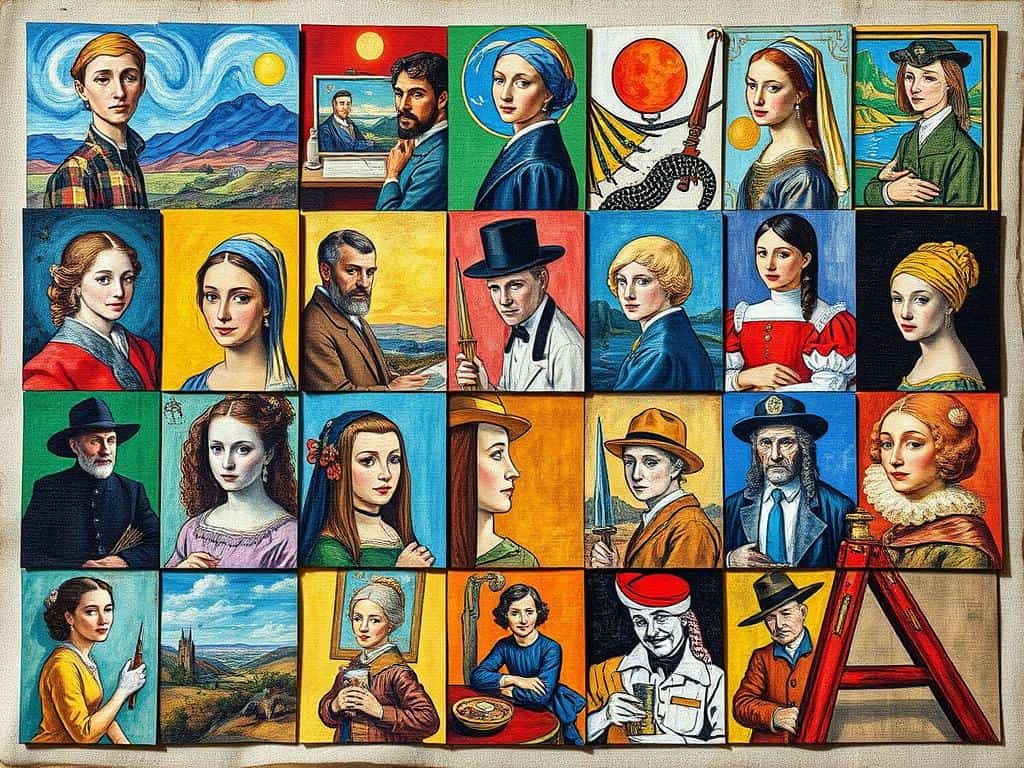
In this conclusion, I give you a quick look at art movements that have shaped our culture for centuries. From the Renaissance to today’s art, each period has its own style and ideas. They show us how art and society have changed over time.
Every art movement, like Impressionism and Cubism, tells its own story. The Baroque period’s drama is different from Romanticism’s deep feelings. By looking into these stories, I hope you see how they shape today’s art and connect with our current issues.
Learning about art history helps us understand how society has grown. These movements are more than just pretty pictures. They show us the big picture of culture and society. I hope this sparks your interest in art’s power to change our world.