As I sat with a cup of coffee on a rainy Saturday, I looked through an old family photo album. The photos brought back memories of happy times with loved ones, now in my home. But, I started thinking about how our indoor air affects our health.
Looking at my messy living room, I realized indoor air can be worse than outside air. The Environmental Protection Agency says indoor pollutants are two to five times higher than outside. This made me want to improve our air quality.
I found six hacks to clean our air from dust mites and formaldehyde. With the right air purifiers and eco-friendly solutions, we can make our home healthier. This will improve our quality of life.
Key Takeaways
- Indoor air pollutants may be 100 times higher than outdoor levels, according to the EPA.
- Improving air quality can reduce risks of asthma, respiratory issues, and allergic reactions.
- HEPA filters in air purifiers effectively remove over 99% of harmful particles.
- Proper ventilation and regular cleaning are essential for a healthier indoor environment.
- Natural solutions, like houseplants, can contribute to improved air quality.
Understanding Indoor Air Pollution
It’s important to know about indoor air pollution to keep our homes healthy. Studies show that indoor air can be much worse than outside air. This bad air quality can harm people, like kids, the elderly, and those with health issues.
Many things can make indoor air dirty. We need to find and fix these problems.
The Importance of Indoor Air Quality
Good indoor air quality is key to staying healthy at home. Bad air can cause serious health issues, like asthma and heart disease. It can also make you feel tired and dizzy.
So, keeping the air clean is very important.
Common Sources of Indoor Air Pollutants
Many things can make indoor air dirty. Mold, tobacco smoke, and cleaning products are big culprits. Dust, pet dander, and mites can also make allergies worse.
Cooking on stoves can add to the problem. Gases like carbon monoxide and nitrogen dioxide can also get in. Plus, old building materials and paints can release harmful chemicals.
Without good ventilation, outdoor pollutants like radon can get inside. This makes our homes even more unhealthy.
Indoor Air Quality Tips
Spending a lot of time indoors means I need clean air to stay healthy. Using certain tips can make my home air better. By cutting down on pollutants and controlling allergens, I can make a healthier space for my family and me.
Cut Down on Pollutants
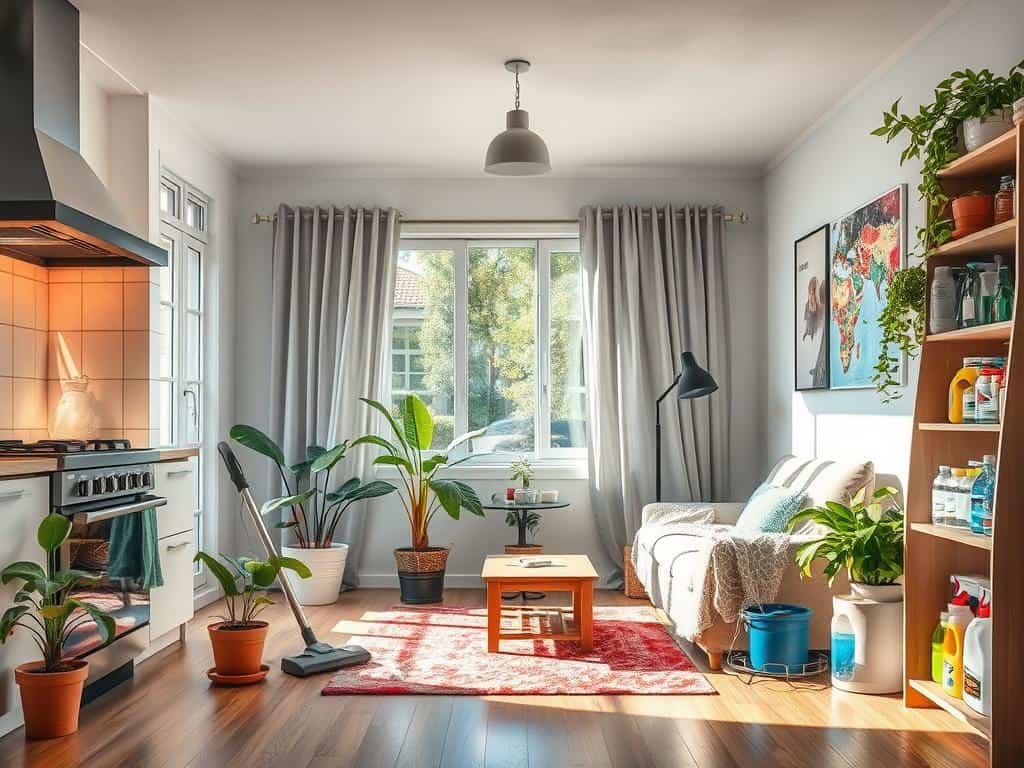
To reduce pollutants, I clean my home often. I choose natural cleaners over chemical ones. Opening windows for ten minutes a day brings in fresh air and lets out bad stuff.
I also make sure my home gets enough air. I check appliances like furnaces to make sure they don’t release harmful gases.
Control Allergens Effectively
Keeping allergens under control is key to good air quality. I vacuum carpets and upholstery a lot to cut down on dust. Using rugs and carpets helps trap dust and particles.
Indoor allergens like pet dander and mold are big problems. So, I clean often and use plants that help clean the air.
Use Air Purifiers Wisely
Air purifiers are great for fighting indoor pollutants. I use portable HEPA air cleaners to filter out bad stuff. It’s important to change the filters often to keep them working well.
Testing my home for radon and making sure smoke detectors work helps keep my home safe.
Improving Home Ventilation
Good indoor air quality is key for health, as I spend about 90 percent of my time indoors. To keep the air fresh, I focus on improving ventilation at home. This lets in fresh air, cutting down on pollutants and making my home more comfortable.
Making Use of Natural Ventilation
Natural ventilation uses outdoor air to clean the air inside. By opening windows or doors, I can lower pollutant levels. This lets in fresh air, improving ventilation without needing mechanical systems.
Also, placing windows right can boost airflow. This makes air move better throughout my home.
Regular Maintenance of HVAC Systems
Keeping my HVAC system in top shape is vital for air quality. Regular maintenance means changing filters often, ideally every 30 days or every six months for bigger filters. Clean air ducts and working kitchen vents also help keep out harmful particles.
By doing this maintenance, I not only improve ventilation but also extend my system’s life.
Conclusion
Improving indoor air quality is key for my health and comfort at home. By using strategies like understanding pollutants and using air purifiers, I create a healthier space. This can reduce pollutants like formaldehyde and biological contaminants by a lot.
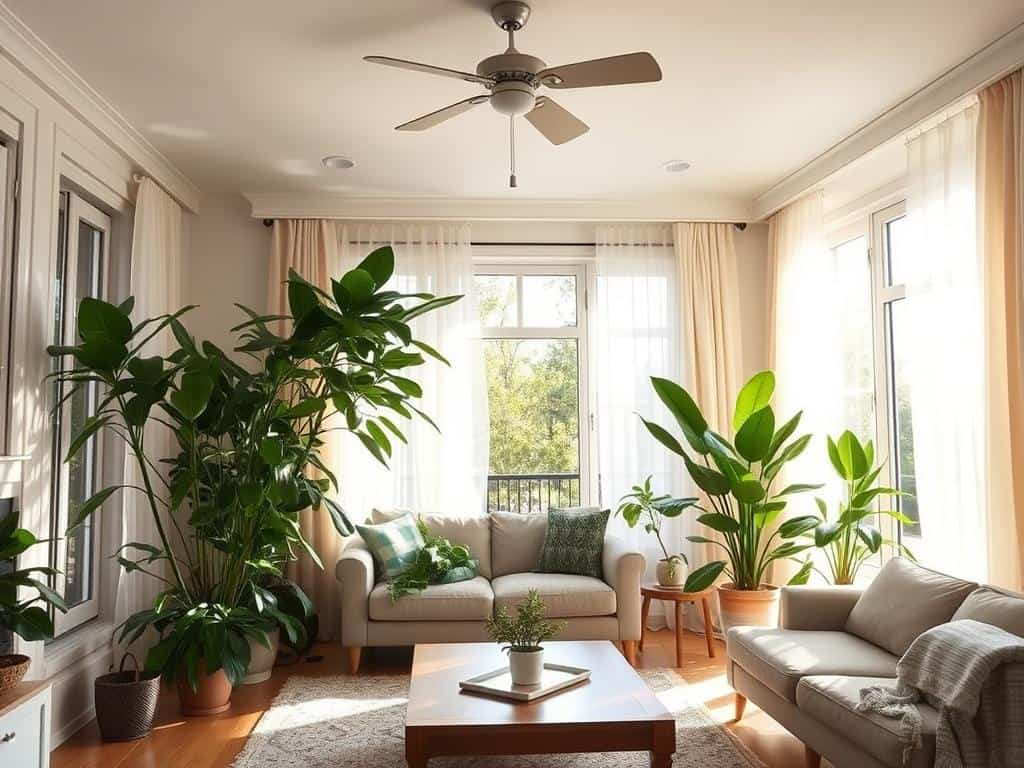
Using natural ventilation and keeping humidity levels right can also help a lot. Keeping my home clean and adding houseplants not only improves air but also makes it look better. These changes can make me feel better mentally and physically.
By keeping up with these efforts, I can have cleaner air and a healthier home. The changes I make today will make our living space more comfortable. Let’s remember how important fresh air is for our daily lives.