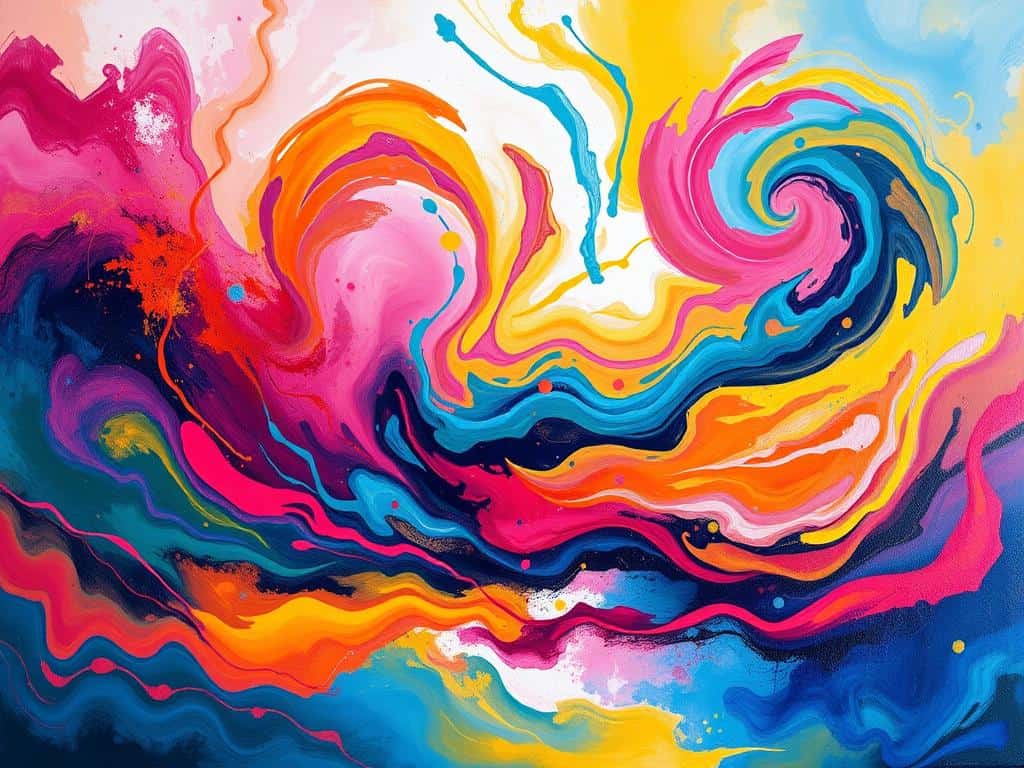
As sunlight filled my studio, I looked at a blank canvas. The white surface showed my doubts. Then, I learned about abstract painting on a cold winter morning.
I let go of the need for perfection. I mixed bright colors and tried different textures. My emotions guided my brush. With each stroke, my anxiety went away, replaced by excitement and freedom.
This experience taught me that art is about freedom, not just being precise. It’s about embracing the unexpected.
In this article, I’ll share abstract painting ideas to spark your creativity. These ideas are for both experienced and new artists. They invite you to explore bold designs and the essence of abstract art.
Key Takeaways
- Abstract painting offers endless opportunities for experimentation with techniques and materials.
- Using a variety of techniques can transform your approach to art, enriching it with texture and depth.
- Mastering the basics in abstract painting enhances creative expression and personal style.
- The Milan Art Institute provides valuable resources and guidance for artists of all levels.
- Viewing your work from different perspectives can lead to new insights and directions in your art.
Exploring the World of Abstract Painting
In my art journey, I’ve found that abstract painting goes beyond traditional art. It grabs your attention with its bright colors and moving shapes. It doesn’t need to show things clearly to be understood.
This style lets me share deep feelings and experiences. It creates a special connection between the art and the person looking at it.
Understanding Abstract Art and Its Appeal
Abstract art is eye-catching, using shapes, colors, and forms to show our world in a new way. It doesn’t stick to realistic pictures. This lets people see it in their own way.
The freedom in abstract art is what makes it special. It lets complex emotions shine through without the usual subjects. Artists like Wassily Kandinsky and Piet Mondrian showed us new ways to see art.
Common Techniques Used in Modern Art
Working with abstract painting means trying out different techniques. Artists often use bright acrylic paints and soft pastel watercolors. They also try black and white ink, puddle pours, and even everyday objects.
Methods like air-blown acrylic painting let me be really creative. It helps me understand my art better and grow as an artist.
Why Abstract Painting Sparks Creative Inspiration
Abstract painting always sparks my creativity. It lets me play with shapes and colors in new ways. This makes me feel free to explore.
Every piece I make surprises me, making me stronger and more confident. Sites like Pinterest are full of ideas. They help me find new things and learn from artists like Mark Rothko and Yayoi Kusama.
Abstract Painting Ideas to Ignite Your Imagination
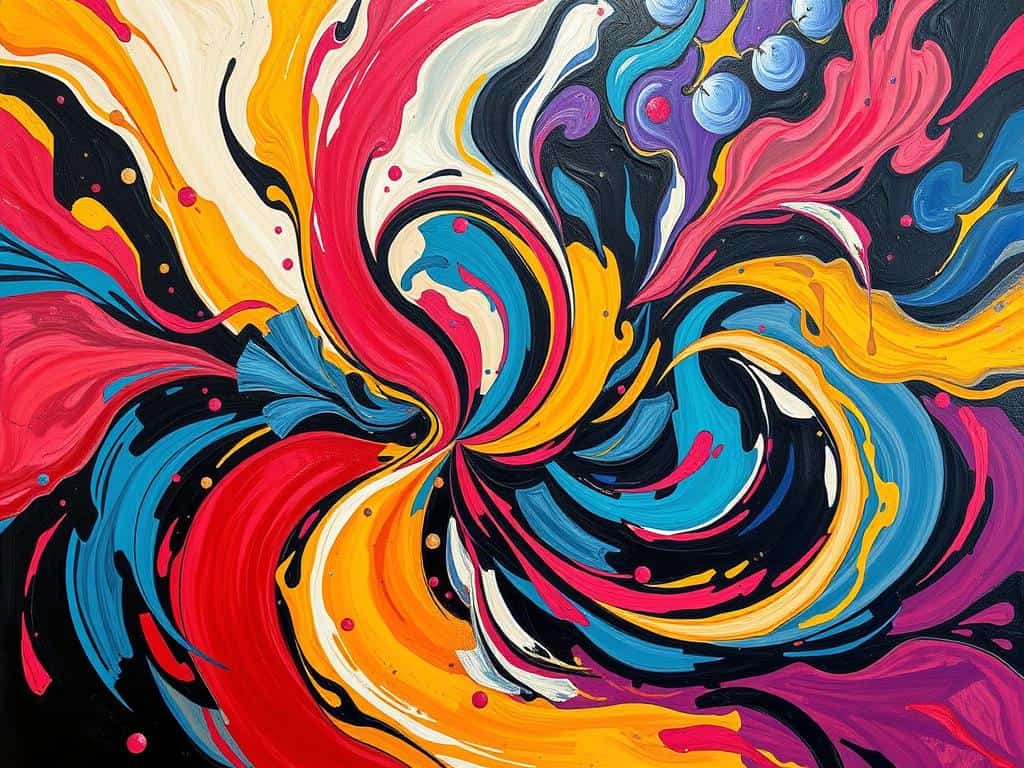
Abstract painting is all about creativity and trying new things. These ideas will help you start exploring and using different techniques. By mixing composition, mixed media, and color theory, you can make art that speaks to people.
Experiment with Underpainting Techniques
Using underpainting techniques makes your art richer. Start with a thin layer of acrylic paint. This layer sets the color and adds depth to your painting.
Play with Composition and Intuitive Mark-Making
Letting your forms grow freely creates a dynamic piece. Spontaneous brush strokes lead to unique and beautiful visuals. This freedom sparks creativity and encourages you to try new things.
Incorporate Mixed Media for Bold Designs
Mixing media in your art brings boldness. Adding paper, fabric, or objects to paint introduces new textures and layers. This mix makes your art more interesting and textured.
Create Texture with Various Tools and Materials
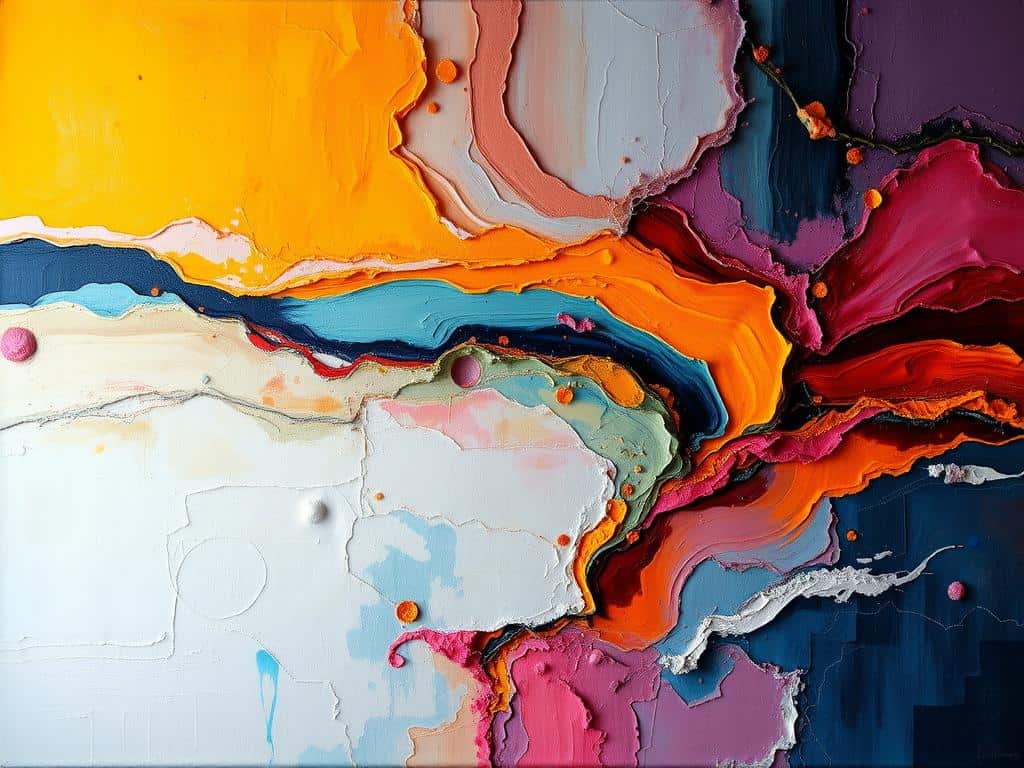
Using different tools and materials adds texture to your art. Brushes, palette knives, or even unusual items can create interesting textures. This variety challenges you to think differently and explore new ideas.
Use Color Theory to Enhance Your Vision
Color theory changes how you paint. Knowing about contrasting and complementary colors helps you create powerful compositions. This knowledge makes your art more engaging and emotional.
Embrace Space and Simplification in Your Art
Understanding negative space is key. Leaving some areas blank focuses attention on the main parts. This adds elegance and lightness to your art, showing the power of simplicity.
Combine Different Painting Styles for Unique Effects
Mixing painting styles leads to new and exciting results. Combining elements from different styles creates a unique piece. This approach opens up new ways to express yourself.
Explore the Use of Charcoal and Pastels
Charcoal and pastels add depth to your abstract art. They create interesting textures, even when used on wet paint. These tools make your art more visually appealing.
Analyze Your Work from Different Perspectives
Viewing your art from different angles helps refine it. Reflecting it in a mirror gives you new insights. This practice helps you understand and improve your art’s balance and beauty.
Conclusion
Exploring abstract painting has shown me how to break free from old ways and start a real artistic journey. The nine ideas I’ve learned are not just tips. They are keys to unlock new colors, shapes, and textures in my art.
These techniques let me see my art in new ways. They make me excited to keep exploring. Each method gives me a fresh view, helping me find my passion again.
Learning about common themes in abstract art, like landscapes and shapes, makes my work richer. I understand how color can make my art fit perfectly in any room. This helps me choose colors that speak to me and connect with others.
By picking the right size and theme for my art, I can create pieces that grab people’s attention. This sparks wonder and interest in those who see it.
These abstract painting techniques will guide me on my artistic journey. I’m ready to grow as an artist by trying new things and caring for my art. These ideas will help me stay true to myself, always seeking new ways to express my creativity.