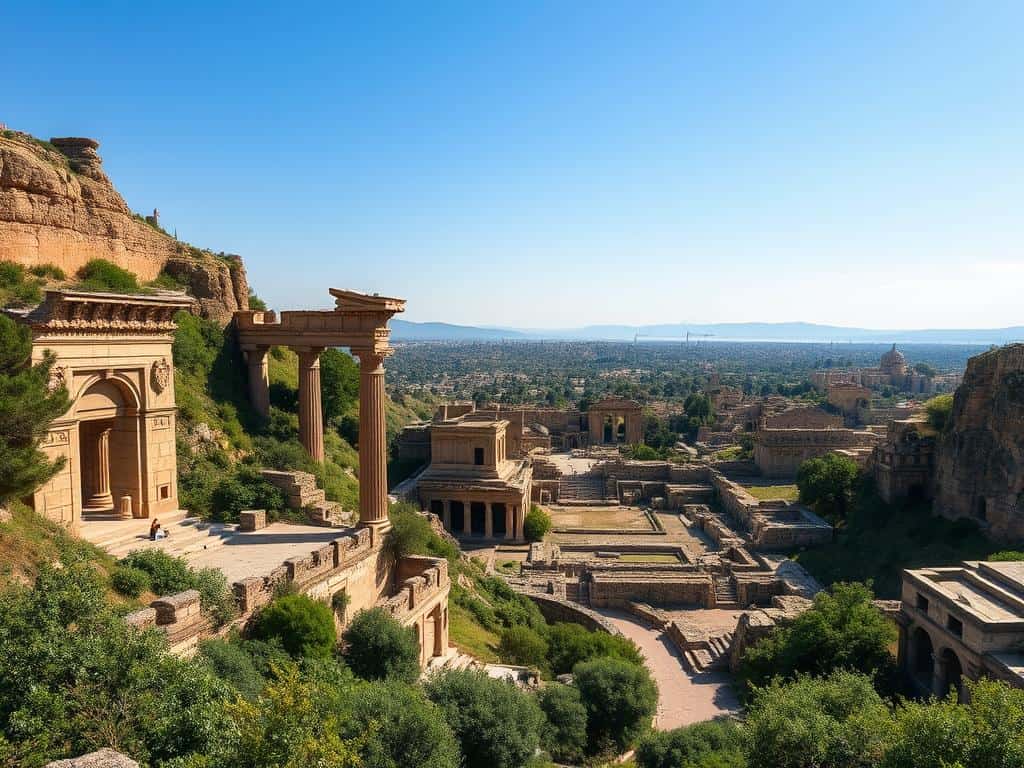
Standing in front of the Altamira cave paintings, I felt a deep connection to our ancestors. These paintings, almost 20,000 years old, told stories of their lives and beliefs. They showed their art and daily routines.
Archaeological discoveries are more than just *hidden treasures*. They open doors to understanding who we are and where we come from. Sites like Altamira and relics like the Rosetta Stone have changed how we see history. They give us insights into human evolution.
The streets of Pompeii, frozen in time by volcanic ash, and the Terracotta Army’s craftsmanship, show us human history. These *archaeological finds* uncover stories hidden for centuries.
Key Takeaways
- Archaeological discoveries reveal the artistry, culture, and beliefs of ancient civilizations.
- Sites like Pompeii provide a snapshot of daily life preserved for centuries.
- The Rosetta Stone was critical in deciphering ancient Egyptian script.
- Recent findings, such as the Staffordshire Hoard, highlight the richness of history in often overlooked places.
- Insights gained from ancient relics challenge and enhance our understanding of human evolution.
Understanding the Importance of Archaeological Discoveries
I love the field of archaeology because it lets us peek into the lives of ancient people. Every artifact, big or small, tells us about their world. It shows us how they lived, what they believed, and how they organized their societies.
This knowledge helps us see our shared history. It also shows us how different cultures were. It’s fascinating to learn about their experiences.
Revealing Insights into Ancient Cultures
By studying old objects, we learn a lot about ancient cultures. We see how they lived, what tools they used, and their art. Places like the Meadowcroft Rockshelter show us how people changed from nomads to farmers.
These sites tell us about the start of farming and how communities grew. It’s amazing to see how people’s lives changed over time.
Changing Historical Narratives
Every find can change what we thought we knew about history. For example, learning more about the Mayan writing system changed our view of their society. It showed they were more advanced than we thought.
Research keeps changing our view of history. It’s exciting to see how new discoveries can rewrite the past.
Enhancing Our Knowledge of Human Evolution
Archaeology helps us understand how humans evolved. By studying old artifacts, we see how societies got more complex. Places like Olduvai Gorge show how early humans adapted to their environments.
This connection to our past makes human history richer. It’s incredible to see how far we’ve come.
Notable Archaeological Discoveries That Reshaped History
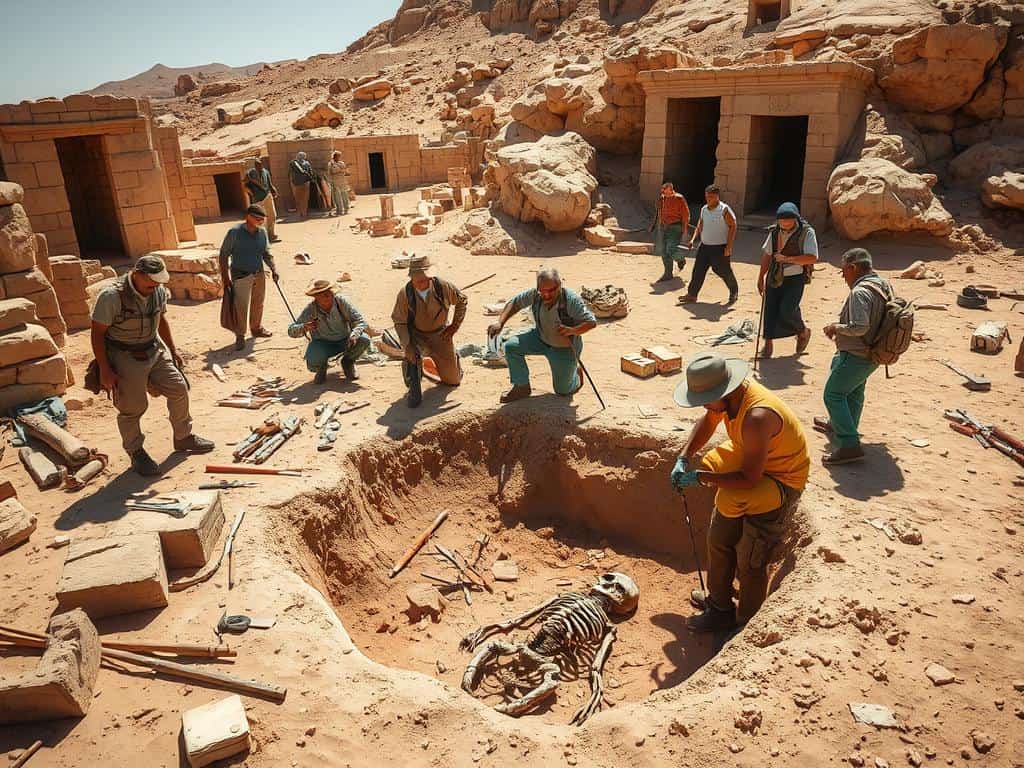
Exploring significant archaeological finds has changed how we see history. From ancient scripts to giant statues, each find adds layers of meaning. The Rosetta Stone and Dead Sea Scrolls have helped us understand ancient texts better.
Monumental structures like the Moai statues and Terracotta Army show us the culture and beliefs of their makers. These discoveries tell us about humanity’s journey through time.
The Rosetta Stone: Decoding Ancient Egyptian Hieroglyphs
The Rosetta Stone is a key find in archaeology. Discovered in 1799, it has texts in Greek, Demotic, and hieroglyphs. In 1822, Jean-François Champollion deciphered it, revealing ancient Egyptian writing.
This breakthrough let historians learn about Egypt’s rulers and religious practices. It opened a door to understanding Egypt’s past.
The Moai Statues of Easter Island: Symbolism and Purpose
The Moai statues are symbols of the Rapa Nui culture. Created between 1250 and 1500, they show the islanders’ skill and beliefs. A new Moai statue was found, sparking interest in their cultural heritage.
The Dead Sea Scrolls: Manuscripts that Transform Biblical Understanding
The Dead Sea Scrolls were found between 1947 and 1956. They are over 700 years older than Jesus Christ. This collection of about 800 manuscripts gives insights into Jewish beliefs and early Christianity.
They have greatly influenced biblical scholarship. Their importance in understanding the Bible cannot be overstated.
Pompeii: A Glimpse into Everyday Roman Life
Pompeii’s ruins offer a look at ancient Roman life. It was buried by Mount Vesuvius in 79 CE. Excavations have revealed homes, artwork, and even a prison bakery.
This city is like a time capsule. It shows the complexities of Roman society.
The Terracotta Army: Insights into Ancient Chinese Culture
The Terracotta Army has around 8,000 life-sized soldiers. Created in the third century BC, it was meant for China’s first emperor in the afterlife. This find gives us a glimpse into ancient Chinese culture.
It shows their military organization and views on death. Each soldier reflects the artistry and craftsmanship of the time, revealing much about their society.
Impact of These Discoveries on Modern Archaeology
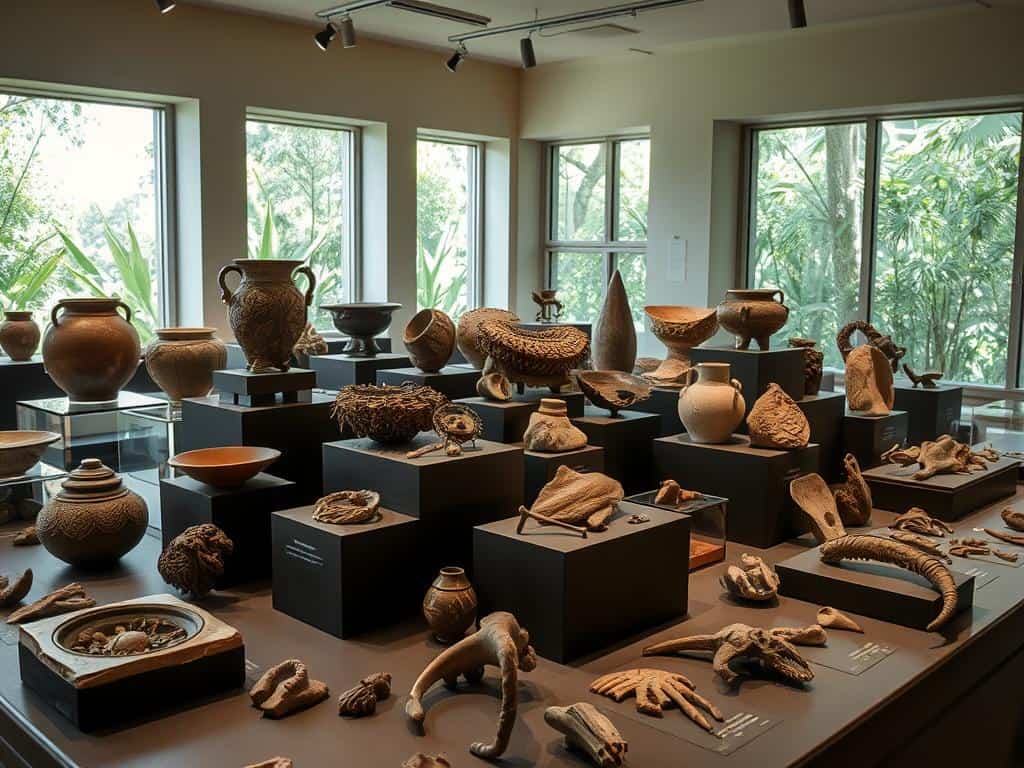
Major archaeological finds have changed modern archaeology a lot. They help us understand the past in new ways. These discoveries are influenced by technology and social context. They connect us to ancient cultures and their impact on humanity.
From the Antiquities to Contemporary Interpretations
The shift from old artifacts to new views shows how history changes. Ancient items and burial ways teach us about culture. For example, tombs in southern Egypt show us how ancient Egyptians lived.
These finds make us think about old societies’ norms. They help us see how they shaped today’s cultures.
Technological Advancements in Archaeological Methods
New tech has made archaeology better. Tools like lidar can find hidden sites, showing us ancient landscapes. Artificial intelligence helps study old scrolls from Vesuvius.
These tools let us find more about our past. They help us see our shared heritage in new ways.
The Role of Cultural Heritage in Understanding Humanity
Cultural heritage is key to understanding us. Looking at artifacts like a Maya king’s jade mask shows us ancient societies’ complexity. Modern archaeology stresses the need to keep this heritage alive.
This ensures future generations can learn from these artifacts. It promotes education and appreciation in all communities.
Conclusion
Exploring our past through archaeology gives us deep cultural insights. These discoveries change how we see history. Each important find shows us the complex lives of ancient people and their stories.
These stories are more than just fun or school stuff. They help us understand our shared human experiences. They connect us across time and space.
The biggest gold coin hoard found in Israel shows how ancient societies traded and had wealth. Finding the ‘Endurance’ shipwreck reminds us of our curiosity and determination. These finds show how important archaeology is for understanding our past, present, and future.
We must keep exploring our past to protect our cultural heritage. Threats like climate change and urban growth make this urgent. By studying ancient lives and places, we keep their stories alive.
By embracing our history through these discoveries, we honor those who came before us. We make our shared story richer for future generations.