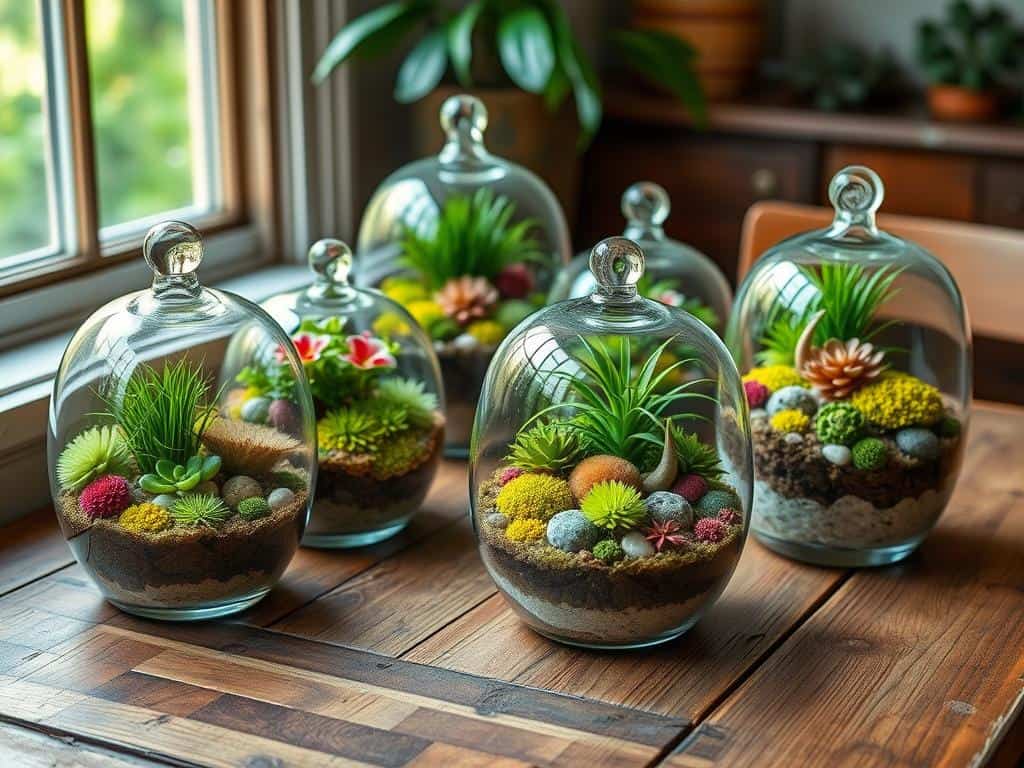
As I sat on my balcony, sipping my morning coffee, I felt the space was bare without plants. That’s when I thought of DIY terrariums. They seemed like a great way to add greenery with little effort. I decided to try making one, turning a simple glass container into a mini jungle.
I chose plants like boxwood and croton for the sun, and mosses for the shade. The whole process was easy, and soon I had a lush mini jungle in my living room.
This plant craft wasn’t just for my home; it became a fun hobby. It’s perfect for anyone with a busy schedule. Building my terrarium was a journey into indoor gardening. If you want to bring nature indoors, follow these six easy steps to make stunning terrariums.
Key Takeaways
- Creating a terrarium is an affordable and rewarding plant craft.
- Choose the right location for your terrarium, avoiding direct sunlight for better results.
- Utilize layers of materials for drainage and plant health inside your terrarium.
- Different plants thrive in terrariums, ranging from sun-loving to shade-loving species.
- Regular maintenance, including light misting, keeps your indoor plants thriving.
Introduction to Terrariums and Indoor Gardening
Creating a terrarium is a fulfilling way to add greenery to your home. These mini ecosystems let you enjoy indoor gardening with less work than traditional gardening. Learning about terrariums is the first step to caring for them.
What is a Terrarium?
A terrarium is a glass container that acts like a mini greenhouse. It holds plants, soil, and decorations. There are open and closed terrariums, each with its own charm. They’re great for those who love indoor gardening and want to add beauty to their homes.
Benefits of Creating DIY Terrariums
DIY terrariums offer many benefits. They help you connect with nature and make your home more beautiful. You can control things like humidity and soil quality to help your plants grow. Plus, making a terrarium is calming and helps you relax.
Choosing the Right Location for Your Terrarium
Choosing the right spot for your terrarium is important. You need to think about light and temperature. Small plants do well in these conditions, and closed terrariums need high humidity. Glass containers like goldfish bowls or mason jars are perfect for plants like ferns and moss. A well-placed terrarium can make your home greener and more beautiful.
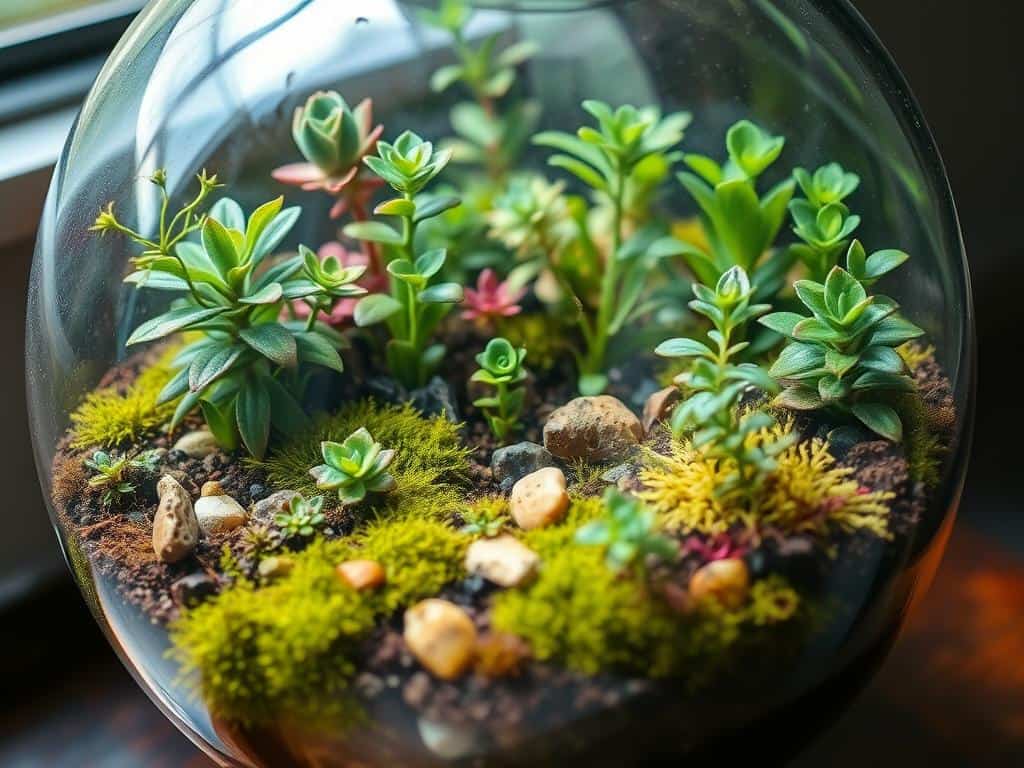
6 Easy Steps to Create DIY Terrariums
Making your own terrarium is fun and rewarding. It’s easy to pick the right materials, put your terrarium together, and keep your plants happy. This process is simple and doesn’t take much time or effort, making it perfect for anyone.
Selecting the Perfect Container
Finding the right terrarium container is key for a healthy garden. You can pick from clear glass options like aquariums, goldfish bowls, or mason jars. Look for a container with a wide mouth for easier access and better air circulation, which is good for your plants.
Gathering the Essential Materials
First, collect what you need. This includes potting soil, activated charcoal, pebbles, and decorations. These items help keep your plants healthy and add beauty to your terrarium.
Building Layers for Optimal Growth
Begin with a 2-3 cm layer of pebbles at the bottom for drainage. Next, add activated charcoal to keep water fresh and soil healthy. Finish with potting soil, making sure it’s deep enough for your plants.
Choosing Suitable Plants
Picking the right plants is important for your terrarium’s success. Choose slow-growing plants like spike mosses, polka dot plants, or ferns. These plants do well in closed spaces and add beauty to your terrarium.
Assembling Your Terrarium
When putting your terrarium together, place your plants in the soil carefully. Use small tools to help. Arrange the plants to look good and make sure they have enough space to grow.
Watering and Maintenance Tips
Caring for terrariums is easy. Open terrariums need watering once a week, while closed ones might need it every 4-6 months. Watch for yellow leaves and remove them. Don’t fertilize, as it can cause too much growth. Clean the container often to keep your plants healthy.
Conclusion
Creating stunning DIY terrariums is more than a hobby. It’s a way to bring nature’s beauty into your home. With six easy steps, anyone can start their own mini garden. You can choose from open terrariums for beginners or closed ones for a self-sustaining garden.
Terrariums do more than look good. They add greenery to your home, improving air quality and creating a calm space. By picking the right plants and keeping conditions just right, your mini garden will thrive with little effort.
I encourage you to try this creative activity. Terrariums not only beautify your home but also bring joy. You’ll love watching your indoor oasis grow. Start crafting your terrarium today and enjoy the lush benefits!