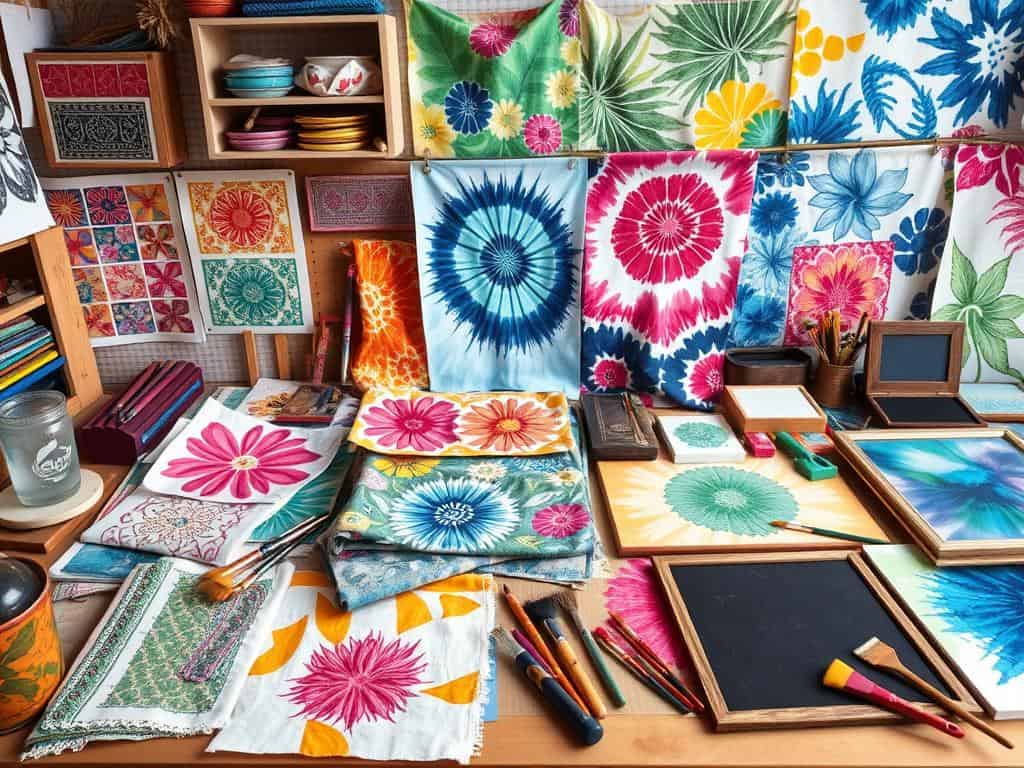
As I stood at my dining room table, surrounded by colors, I felt excited. The afternoon light made everything glow. I remembered a project where I used block printing on canvas. It turned plain fabric into something special that started conversations everywhere.
Today, I want to try six new ways to print on fabric. These techniques can make my clothes, home, and gifts stand out. But, I need to know which method works best for me. This way, my designs will be beautiful and useful.
Key Takeaways
- Explore various textile printing techniques for unique fabric designs.
- Each method has specific advantages and trade-offs that influence my projects.
- Understanding fabric types is key when picking a printing technique.
- Innovative approaches like block printing can add a personal touch to projects.
- Cost and durability vary a lot between different fabric printing methods.
Understanding Different Textile Printing Techniques
Exploring textile printing methods opens up a world of possibilities for customizing fabrics. Each method has its own process and results. It’s important to know the basics for a successful printing project.
This overview covers key methods like screen printing, dye sublimation, and pigment printing. We’ll look at their applications and what to expect from them.
Overview of Fabric Printing Methods
Pigment printing uses colored adhesive to bond with fabric threads. Dye printing, on the other hand, requires dyeing threads for the material.
Reactive dyes are great for cotton and linen, while acid dyes are best for wool. Polyester uses disperse dyes, and acrylic fibers are suited for cationic dyes. Choosing the right fabric is key for beautiful dye prints.
Screen printing can create vibrant colors using pigments or dyes. It pushes ink into the fibers with a rubber spatula.
Factors Influencing the Choice of Printing Technique
Several factors influence my printing choice. Fabric type is a big factor. For example, screen printing is great for large orders because it’s efficient.
Dye sublimation, on the other hand, offers vibrant, full-color designs. It works best on specific fabrics. The design’s complexity also matters, as it can affect the outcome, like with inkjet spraying on textured materials.
Budget is another factor. Each method has different costs based on production size and material needs.
Creative Techniques for Printing Your Own Fabric
Printing your own fabric opens up a world of creativity. You can pick from many techniques, each with its own perks and challenges. Here are some top methods to enhance your fabric designs.
Stamp Printing
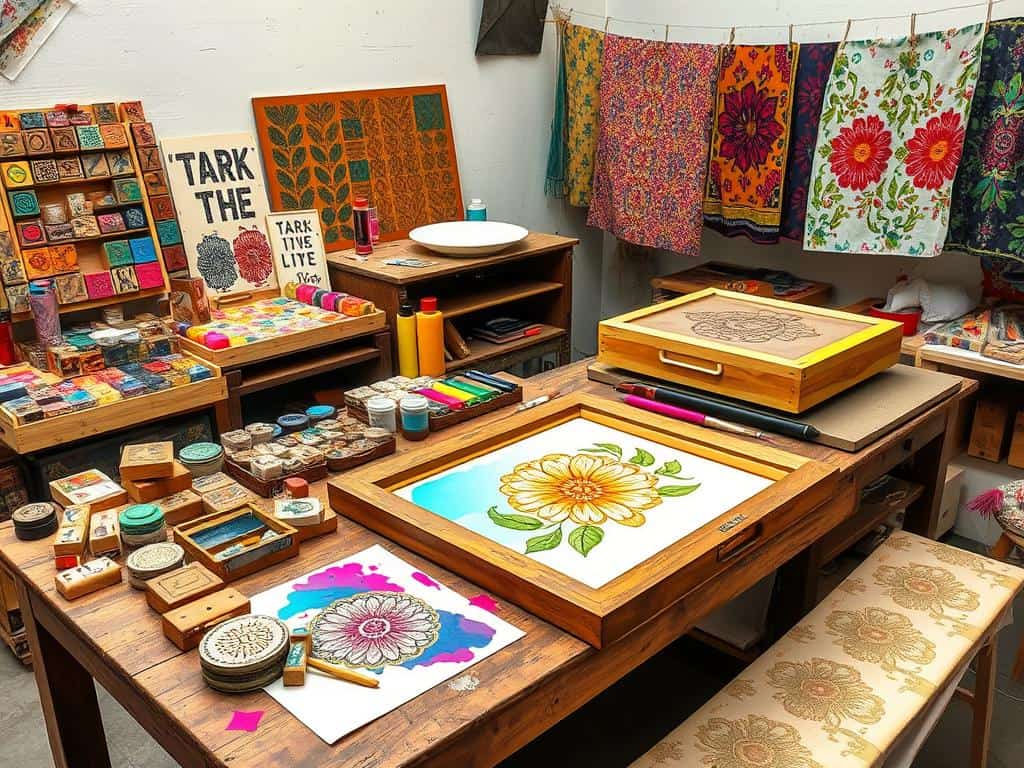
Stamp printing is a fun way to make fabric unique. It uses a custom stamp to add designs, perfect for small batches. It’s cheap but can’t handle detailed designs well.
This method is simple and fast. But, the designs might not look as sharp.
Transfer Printing
Transfer printing lets you use home printers for personal projects. It’s easy and good for small batches. But, the prints might not last long and can fade or crack.
Knowing this helps set the right expectations for your designs’ longevity.
Screen Printing
Screen printing is great for making lots of prints at once. It creates bright designs but needs a lot of work. Making screens for each color can waste materials, but the prints last long.
It’s good for many designs, except for complex ones with lots of colors.
Dye Sublimation
Dye sublimation makes soft, bright prints that stick to the fabric forever. It’s perfect for detailed designs. But, it only works on polyester, limiting your fabric choices.
The special equipment needed can be expensive, affecting your budget.
Pigment Printing
Pigment printing works on both natural and synthetic fabrics. It makes bright prints but keeps the ink on the fabric. This can cause colors to fade with washing.
It’s popular because it’s easy to use and prints quickly without much prep.
Reactive Printing
Reactive printing creates a strong bond between ink and fabric. It ensures colors stay bright and prints last through many washes. It’s a favorite among pros.
But, preparing fabrics for it can be complex and costly. The results are worth it, though, for their stunning look.
Exploring DIY Fabric Designs
Creating your own fabric designs can be very rewarding. I love trying out different methods to make unique patterns and prints. These add a special touch to my projects. I’ll share some practical techniques like the freezer paper method, label method, and using printable fabric sheets.
Freezer Paper Method
The freezer paper method is both versatile and cost-effective for fabric printing. It uses freezer paper as a stabilizer, making it easier to print designs on fabric. I iron the paper onto my fabric, then print a design with my inkjet printer. This method is great for detailed patterns and graphics, ensuring a clean finish.
Label Method
The label fabric printing method is perfect for quick fabric printing needs. I use blank fabric sheets and my printer to make labels that stick well to clothes or crafts. It gives high-quality results with clear images and bright colors, perfect for custom fabric items or gifts.
Printable Fabric Sheets
Printable fabric sheets are great for those new to fabric printing. They let me print designs on fabric without worrying about alignment. After printing, I cut out the designs and sew or iron them onto my projects. These sheets are easy to use and reliable, making them a top choice for me.
Conclusion
Exploring different textile printing techniques has really broadened my view. Each method, from traditional hand-block printing to modern digital processes, has its own benefits. This knowledge lets me choose the right technique for my projects, big or small.
Digital textile printing, a growing part of the industry, shows how new ideas are changing our work. It offers fast delivery, a wide color range, and top-notch image quality. Using these advanced methods, I can make unique fabrics that truly showcase my style.
Now, I’m excited to try new things and make custom fabrics at home. It’s not just a dream; it’s a journey I’m on, ready to bring my ideas to life with the right tools and techniques.