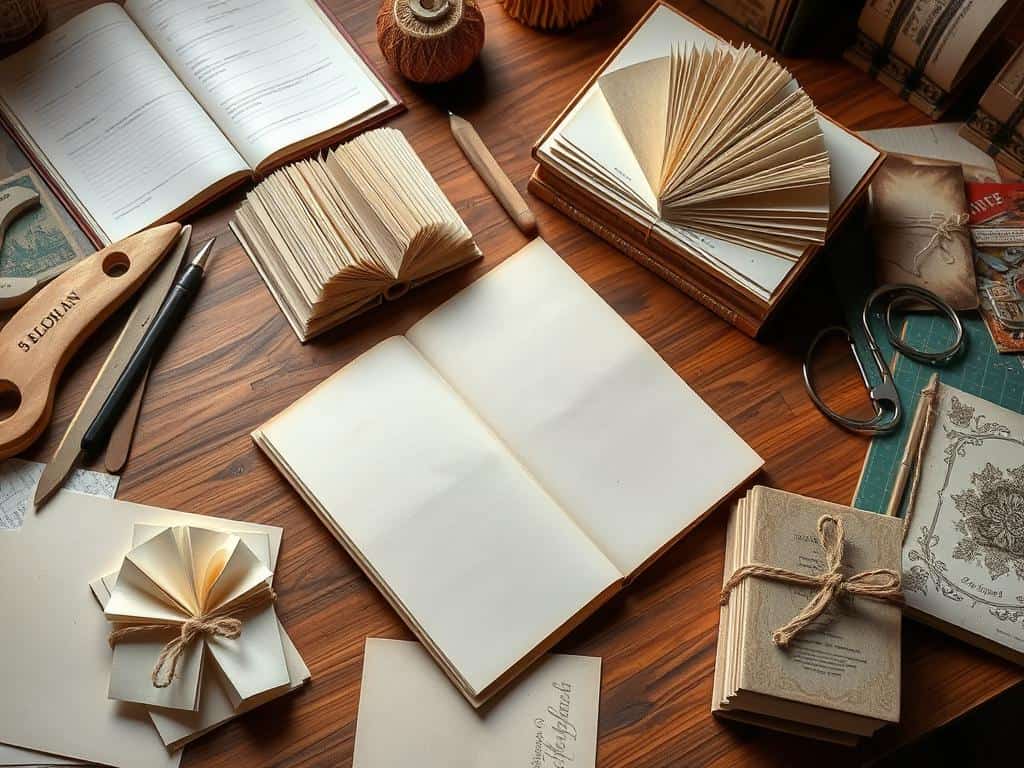
In a cozy café corner, I saw people with their notebooks. Each page was filled with stories, sketches, and thoughts. It made me think of my own journey making handmade notebooks.
I remember my first bookbinding attempt. I felt a surge of creativity as I stitched pages together. It turned simple paper into a beautiful keepsake. This moment showed me that DIY journaling is more than writing; it’s an art that tells personal stories through paper crafts.
This experience sparked a passion in me. I wanted to learn more about bookbinding. I found six easy techniques that anyone, even kids, can try. Why not explore the world of handmade notebooks and let your imagination soar?
Key Takeaways
- Bookbinding offers a fun and creative outlet for personal storytelling.
- Essential tools like a needle and thread enable various bookbinding techniques.
- Kids can learn simple binding methods with common household materials.
- Each technique allows for unique artistic expression, suitable for all ages.
- DIY journaling can be a wonderful companion for self-exploration and creativity.
Introduction to Bookbinding
Bookbinding is a craft that lets you express your creativity. It’s about turning sheets of paper into a book. This process lets you share your ideas in a real way.
Through bookbinding, you can learn many techniques. You can start with simple pamphlet binding or try more complex methods like Coptic binding.
What is Bookbinding?
Bookbinding is about putting together many sheets of paper into one book. It involves folding, cutting, and sewing. The goal is to make a book that looks good and works well.
This craft is for everyone, from beginners to experts. It connects people to their projects in a special way.
The Importance of Bookbinding in Crafts
Bookbinding is more than just making books. It’s a key skill for those starting in paper crafts. It boosts your creativity and teaches you about materials and techniques.
Many beginners struggle to find study resources or tools. But, starting with simple projects can help you grow. Learning from books like “Making Handmade Books” can really help.
Bookbinding for Beginners
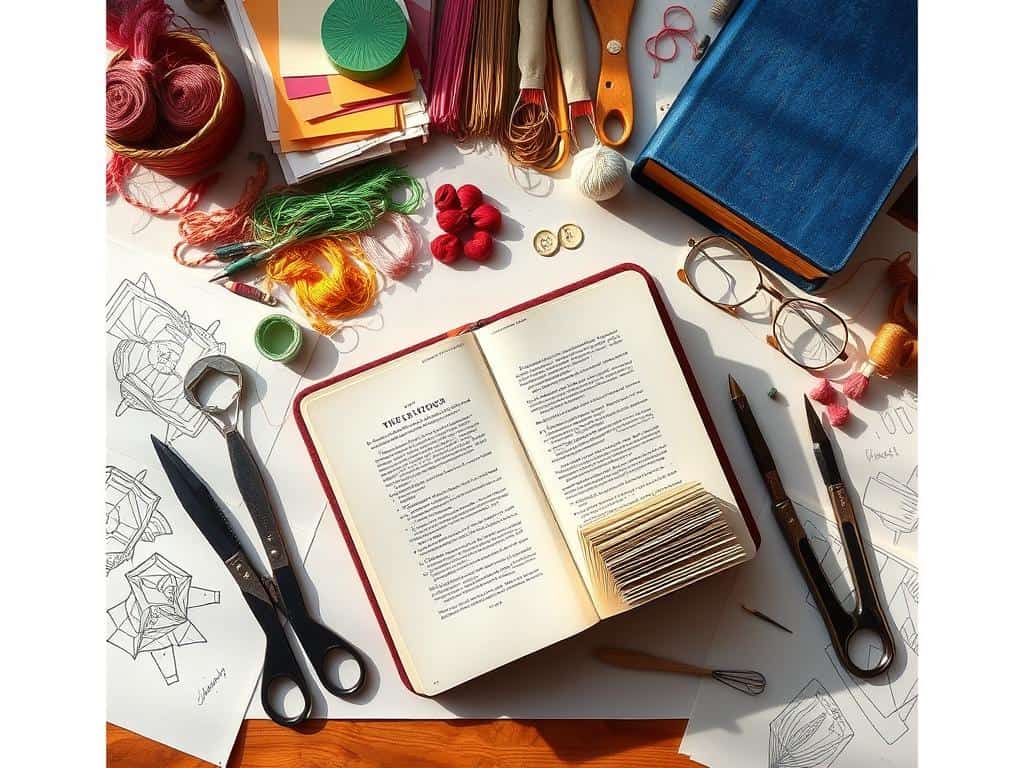
Starting my bookbinding journey, I find it key to know the tools and materials. Learning the basics makes the process easier and more fun. With the right tools, making beautiful books is a joy.
Essential Tools and Materials
The main bookbinding materials I use are different papers like printer paper and watercolor paper. I also have tools like a nine-inch ruler and needles for threading. Safety goggles and a tac help me work safely and accurately.
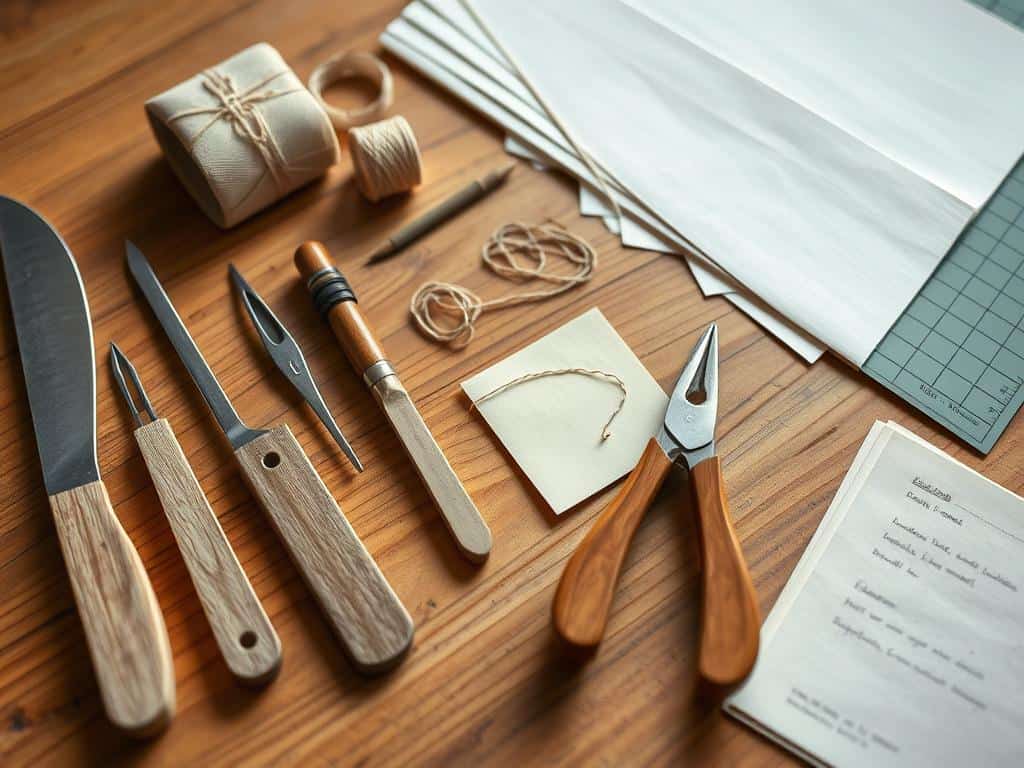
Decorative items like beads and charms can make the book more interesting. When threading, I keep about four inches of thread visible. Techniques like pamphlet binding and saddle stitch are great for beginners. They need little material and help me learn quickly.
Common Techniques for Beginners
Starting with simple common binding techniques for beginners boosts my confidence. The saddle stitch method is easy and great for beginners. It involves marking six holes in the cover.
Using linen binder’s thread adds strength, while binder’s tape supports the spine. These methods help me understand book structure better, preparing me for more projects.
Exploring 6 Easy Bookbinding Techniques
Bookbinding is a great way to add creativity to your projects. I’ve found many easy bookbinding techniques that fit different tastes. Let’s look at these six methods, each with its own charm and use.
Saddle Stitch Method
The saddle stitch is easy to learn. It folds paper in half and stitches it along the crease. It’s great for small booklets or zines, perfect for fast projects.
Japanese Stab Binding
Japanese stab binding adds an artistic touch. It uses decorative stitches to hold pages and beautify the book. It’s lovely for scrapbooks and journals.
Pamphlet Binding for Quick Projects
Pamphlet binding is simple and fast. It folds and stitches pages together without glue. It’s perfect for quick, high-quality projects.
Coptic Binding for Flexibility
Coptic binding is great for flexible books. It lets the book open flat, ideal for sketchbooks or journals. It’s both beautiful and practical.
Binding with Tape for Simplicity
Using tape is a quick and easy way to bind. It’s perfect for fast notebooks or journals. It lets you focus on your content, not the binding.
Ribbon Binding for a Creative Touch
Ribbon binding adds a soft, charming finish. It secures pages and decorates the book. It’s a lovely way to make your projects unique.
Conclusion
Reflecting on bookbinding, I see it as a world full of creativity, perfect for making handmade notebooks. Each technique offers a unique way to dive into DIY journaling. This journey has not only improved my skills but also made me appreciate this ancient craft more.
The history of bookbinding is fascinating. It started around 100 BCE in India and evolved with Johannes Gutenberg’s movable type in the 1440s. Innovations in materials and methods have kept bookbinding alive, allowing for both restoration and personal creations. Mastering techniques like Coptic stitch and long stitch bindings is both rewarding and empowering.
Embracing bookbinding has not only improved my skills but also connected me with a community of crafters. Yet, I’ve learned that self-teaching can lead to bad habits. Guided learning is key. Whether making simple journals or complex designs, the knowledge I’ve gained makes my bookbinding journey both enriching and enjoyable.