Walking through ancient cities or looking at famous buildings, I’m amazed by their stories. These stories show human strength and creativity. Think of the workers in Egypt, building the Great Pyramids over 4,500 years ago.
They worked under the hot sun, placing massive stones together. Each stone was a bold move against the odds, aiming to last forever. History is full of bold achievements, like Hannibal Barca’s Alps crossing with war elephants in the 3rd century BCE.
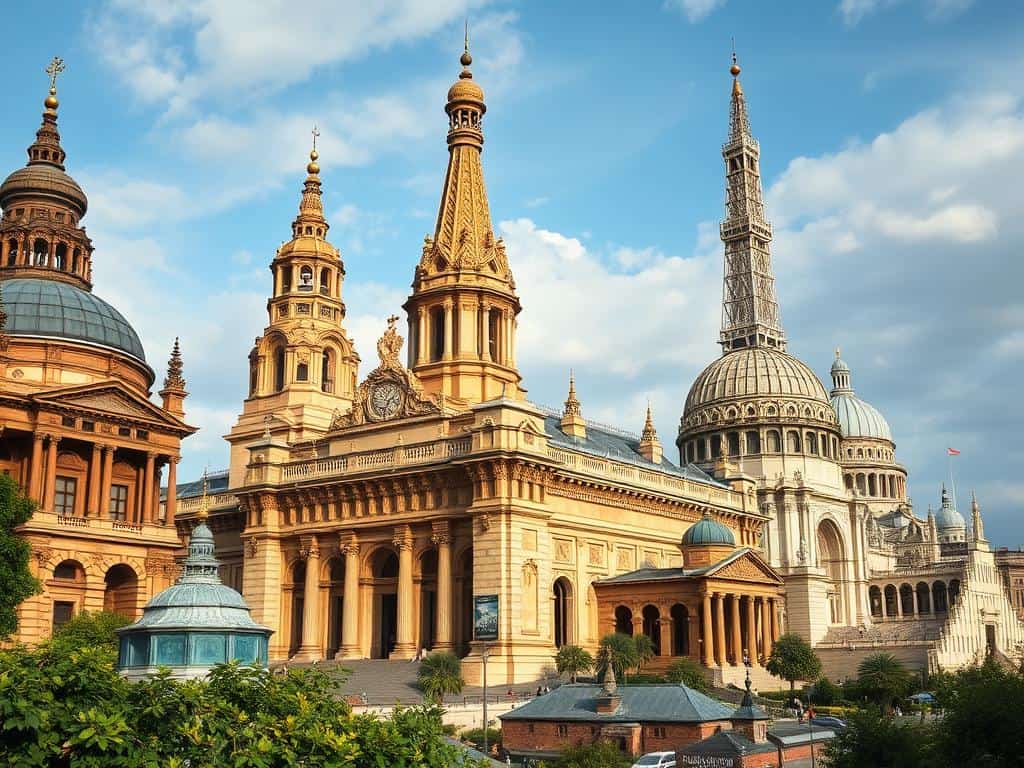
Or the detailed design of St. Peter’s Basilica, which took over a century to finish. These big projects faced many hurdles, like money problems, politics, and physics. Let’s look at ten amazing architectural wonders that changed history and continue to amaze us today.
These structures show that true innovation comes from big challenges. They remind us that overcoming obstacles is key to success. Join me as we explore the lasting impact of these historic landmarks.
Key Takeaways
- Architectural marvels like the Great Pyramids showcase historical ingenuity.
- Many iconic structures faced significant construction challenges throughout history.
- Innovative engineering solutions facilitated the completion of grand designs.
- Some constructions, like the Sydney Opera House, exceeded original budget estimates.
- Opposition and skepticism often accompanied new architectural endeavors.
- Modern architecture increasingly focuses on sustainability and harmonizing with historical elements.
The Great Pyramids of Giza: A Testament to Architectural Ingenuity
The Great Pyramids of Giza are huge milestones in architecture history. They show amazing engineering and design skills. Built between 2575 and 2465 BCE, the Great Pyramid, also known as Khufu’s pyramid, shows the advanced building techniques of ancient Egypt. It was once 482 feet tall, proving the skill and teamwork of its builders.
Construction Techniques and Tools Used
The ancient Egyptians used clever construction techniques to build the Great Pyramids. They used ramps, both straight and zigzagging, to move around 2.3 million limestone blocks, each weighing 2.5 tons. A team of about 20,000 people worked together to align the pyramid with the four cardinal points, showing their deep understanding of astronomy. They used simple tools made from copper, wood, and stone, showing their resourcefulness.
Legacy of the Pyramids in Ancient Civilization
The Great Pyramids’ impact goes beyond their physical presence. They were seen as tombs for Pharaohs, linking them to the gods of ancient Egypt. Their design inspired many, shaping architectural styles worldwide. The pyramids were more than graves; they were symbols of ancient Egyptians’ culture and beliefs. Their grandeur continues to amaze scholars and visitors, making them symbols of human achievement.
Hannibal’s Daring Alps Crossing and Its Impact on Architecture
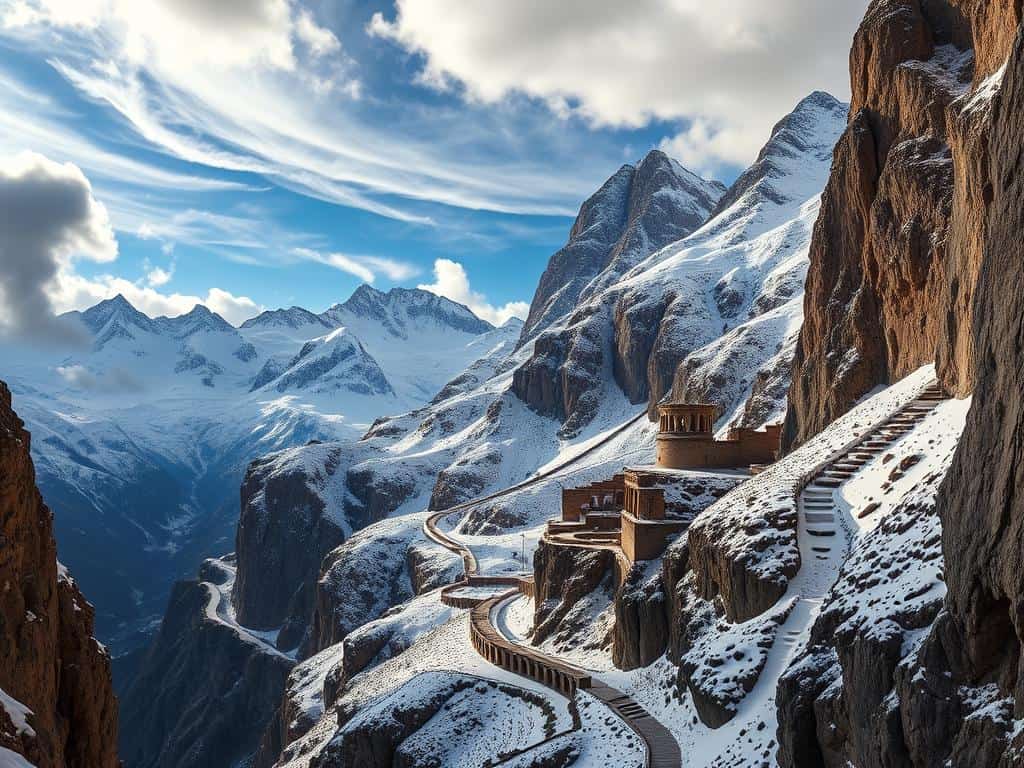
Hannibal Barca’s bold Alps crossing during the Second Punic War is a key moment in history. It goes beyond just military tactics. This daring move not only caught the Romans off guard but also inspired future generations, mainly in architecture.
Strategic Engineering Behind the Trek
Hannibal planned his Alps crossing with great care, knowing the harsh terrain. He used advanced strategies and logistics, showing the power of military engineering. His success in crossing the Alps showed how good planning can lead to victory, even against huge odds.
Hannibal’s journey set the stage for future military operations. It showed the value of strategic planning in achieving surprising victories.
Influence on Future Military Structures
Hannibal’s journey influenced military designs and fortifications for centuries to come. The skills he developed during the Alps crossing helped later rulers and engineers build strong military structures. These structures were designed to work well in different environments, giving a strategic edge.
Hannibal’s methods changed military engineering and set a new standard for architectural innovation. His legacy continues to inspire new approaches in military and architectural design.
Architectural Marvels: The Eiffel Tower and Its Controversy
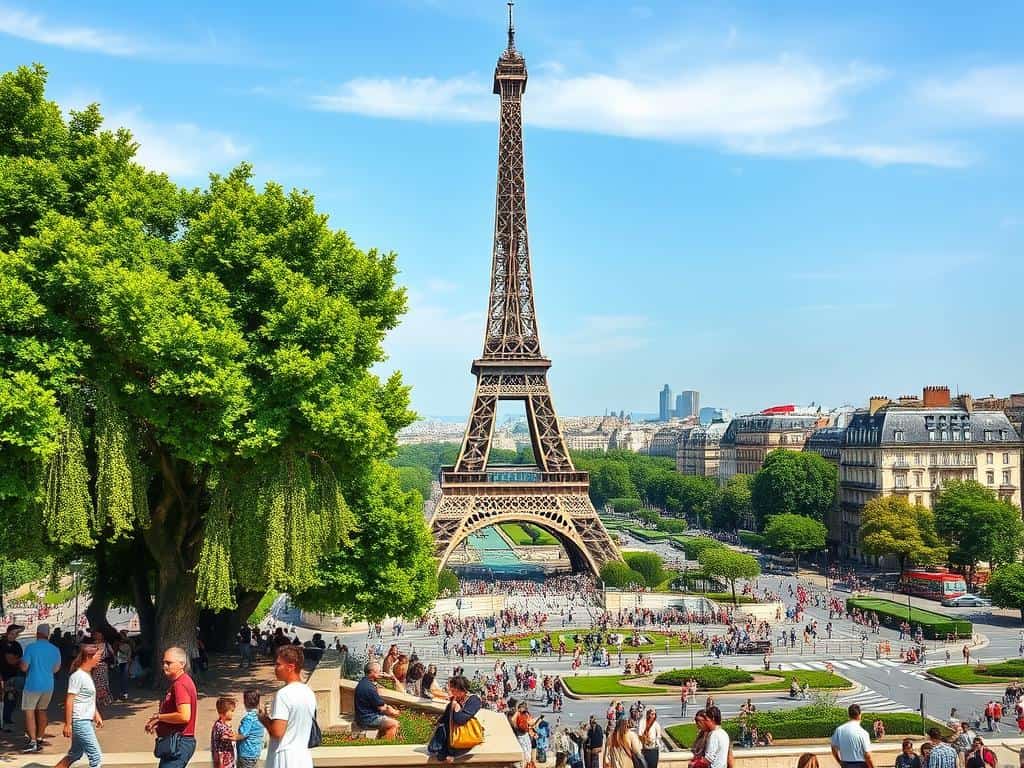
The Eiffel Tower was at the center of a big debate in Paris when it first appeared. Gustave Eiffel wanted it to be the main attraction for the 1889 World’s Fair. But, artists and smart people thought it was ugly and ruined the view of Paris.
Despite the criticism, Eiffel didn’t give up. He worked hard to get support for his project. Eventually, he won over enough people to keep building.
Initial Opposition and Public Sentiment
When the Eiffel Tower was first built, people didn’t like it. They worried it would hide the beauty of Paris. Famous people also spoke out against it, saying it was a bad addition to the city.
But, as the tower grew, people started to see it in a new light. They were amazed by its engineering and design. Slowly, they began to love it.
Transformation into a Cultural Icon
Over time, the Eiffel Tower became a symbol of Paris. It drew in millions of visitors during the World’s Fair. Today, it’s a key part of Parisian culture and a symbol of French creativity.
What was once seen as a problem is now a beloved landmark. It attracts millions who want to see this amazing structure.
A Testament to Engineering during the Era
The Eiffel Tower is more than just a beautiful sight. It’s a huge engineering achievement from its time. It was made of 18,038 metal parts and held together with 2.5 million rivets.
It took a lot of iron and paint to build. The project used 7,300 tonnes of iron and was finished in two years. Its design was not just pretty; it showed off smart engineering.
Conclusion
Looking back at these architectural wonders, I’m amazed by their impact on our world. Each achievement, from the Pyramids of Giza to the Eiffel Tower, shows human creativity and the challenges overcome. These structures symbolize our drive for innovation and what we can achieve together.
The stories of the Great Wall of China, the Colosseum, and skyscrapers like Burj Khalifa are inspiring. They show these landmarks are more than just buildings; they are part of our shared history and dreams. The change in architectural styles, from the Taj Mahal to Bosco Verticale, shows our ongoing search for beauty and function.
These architectural marvels inspire us to dream and strive for greatness. They remind us that with determination and vision, we can conquer any challenge. The journey of architectural diversity and innovation will keep shaping our cities and lives.