
Walking through the U.S. Astronaut Hall of Fame, I feel the excitement of space history. The “Through the Eyes of a Hero” exhibit is unforgettable. It shows the courage and inspiration of legends like Neil Armstrong and John Glenn.
Their drive is what NASA stands for. It’s about exploring space and pushing limits. Each astronaut here is a hero, known for being inspired, curious, and brave.
The rivalry of the Cold War sparked our journey to the stars. It led to huge wins like the moon landing. The Mercury 7 astronauts’ stories are etched in history, showing our first steps into the unknown.
Thinking about these journeys, I realize how they’ve changed our view of space. It’s a story of courage and discovery.
Key Takeaways
- The U.S. Astronaut Hall of Fame showcases the attributes of groundbreaking astronauts.
- Narratives of iconic figures like Alan Shepard and Neil Armstrong highlight the human spirit in space exploration.
- Nasa’s establishment in 1958 was a response to early Soviet space achievements.
- The Apollo 11 mission is a key milestone in the story of human exploration.
- Tragic losses in space missions serve as a reminder of the risks involved in advancing knowledge.
- The history preservation efforts ensure future generations remember the legacy of astronauts and their remarkable journeys.
The Dawn of Space Exploration
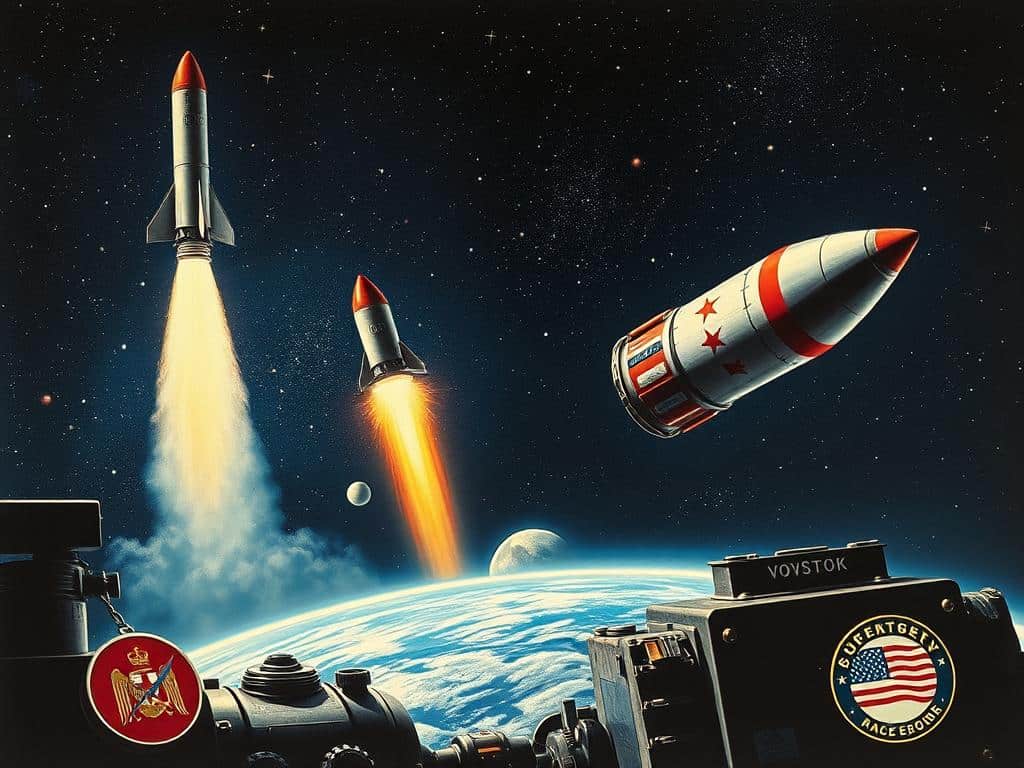
Space exploration began in a time of great tension, the Cold War. This era sparked the Space Race, a fierce competition between the U.S. and the Soviet Union. The launch of Sputnik 1 by the USSR on October 4, 1957, was a turning point. It showed the U.S. needed to step up its space efforts.
President John F. Kennedy’s dream of landing on the moon inspired the nation. It pushed NASA into a new era of space exploration.
The Cold War and the Space Race
The Cold War greatly shaped space exploration. It mixed national pride and security with technology and science. The Space Race was about showing who was better technologically.
This competition led to many achievements. It pushed human limits and sparked public interest nationwide.
Project Mercury
NASA started Project Mercury in the early 1960s to tackle the Cold War and Space Race challenges. It aimed to develop human spaceflight skills. Over 25 flights, Project Mercury completed six manned missions.
It focused on safe orbits and recovery. The program helped understand human limits and solidified America’s space role.
Gemini Program Innovations
The Gemini Program built on Mercury’s success, focusing on longer flights and complex maneuvers. It was key for future lunar missions. Gemini introduced rendezvous and docking, vital for Apollo’s success.
Looking back, these innovations show how each program helped us understand space better. They shaped NASA’s future and our space exploration goals.
Apollo Missions: Reaching for the Moon
The Apollo Missions were a key part of space history. They showed human bravery and smart thinking. With 11 missions, the program kept pushing space limits. The Apollo 11 moon landing was the biggest achievement.
The Historic Apollo 11 Mission
Apollo 11 launched on July 16, 1969. Neil Armstrong became the first person on the Moon on July 20. This moment was a victory for America and humanity.
Before Apollo 11, there was Apollo 1. It was a sad failure that killed three astronauts on January 27, 1967. This made NASA focus more on safety. Despite this, the program landed on the Moon six times, bringing back 842 pounds of Moon rocks.
Apollo Program Aftermath
The Apollo program changed space exploration forever. Apollo 11 is famous, but Apollo 13 showed NASA’s strength. The program cost $25.4 billion in 1973, about $257 billion today.
The Apollo Missions helped start new projects like Skylab and the International Space Station. They inspired a new generation of scientists and engineers. The Apollo program’s legacy is huge, pushing us to explore more.
Space Legends and Long-term Achievements
Space exploration has seen many programs stand out. They show not just tech advances but also humanity’s drive to explore. Skylab was a key effort, starting human habitation in space. Astronauts on Skylab did important experiments, showing us more about life in space.
This work set a path for future missions. It helped create the lasting legacy of the International Space Station.
The Skylab Experience
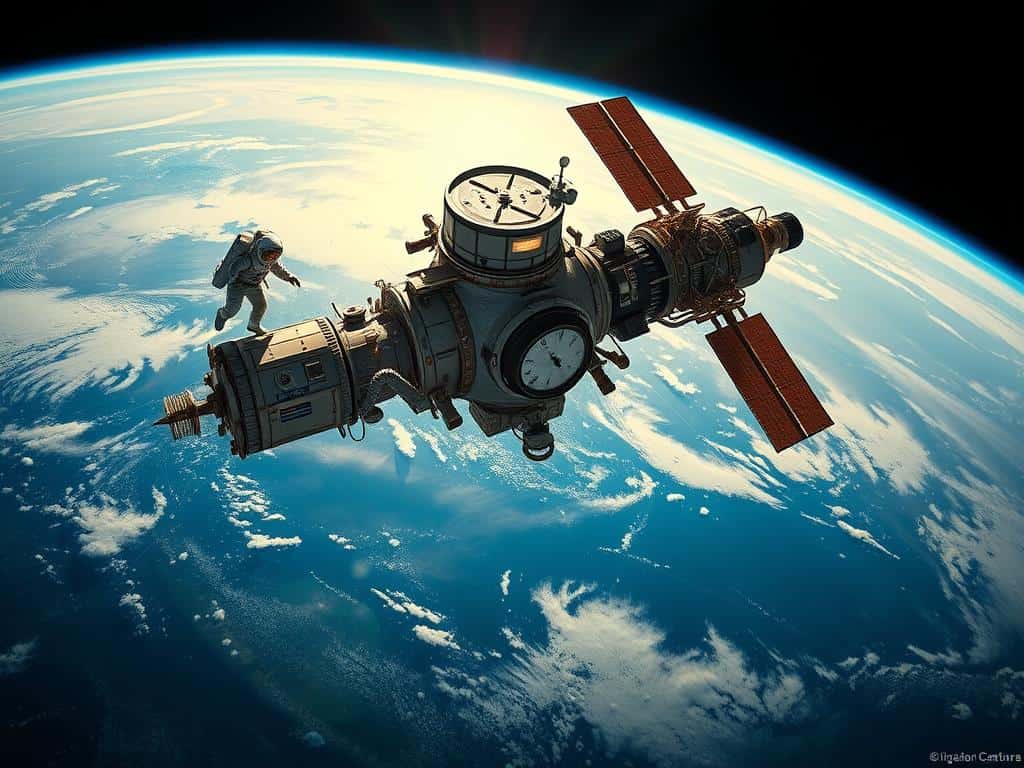
Skylab was America’s first space station, running from 1973 to 1974. Its three crewed missions showed what’s needed for long space stays. Astronauts did research in many fields, showing our tech skills and ability to live in space.
The lessons from Skylab help today’s space missions. The International Space Station is a key example, where working together is key.
International Space Collaboration
After Skylab, space teamwork grew stronger. The Apollo-Soyuz Test Project in 1975 was a big step. It showed how nations could work together for shared goals.
This teamwork grew into the International Space Station. It’s a top facility for research and tech development. It shows a shared dream for humanity’s future in space, with countries working together to tackle big challenges.
The Legacy of the Space Shuttle Program
The Space Shuttle program was a big deal for engineering and teamwork, running from 1981 to 2011. It had 135 missions, making many scientific breakthroughs and helping the International Space Station.
Though it faced sad losses like the Challenger and Columbia, it paved the way for more. The shuttle opened up new possibilities, bringing nations together and inspiring future generations.
Conclusion
Reflecting on space exploration, I am amazed by the impact of key missions and brave astronauts. NASA’s journey, from Project Mercury to Apollo, has paved the way for future space travel. The Artemis missions and Mars voyages are next, guided by our past achievements.
Advancements in technology, like better propulsion and AI, are key for space travel. We also need asteroid detection and unmanned missions for progress. It’s important to inspire the next generation of scientists and explorers.
The Hubble Space Telescope has shown us the universe’s secrets for over thirty years. Each new discovery fuels our endless curiosity. International cooperation, built on our space history, will help us explore further.