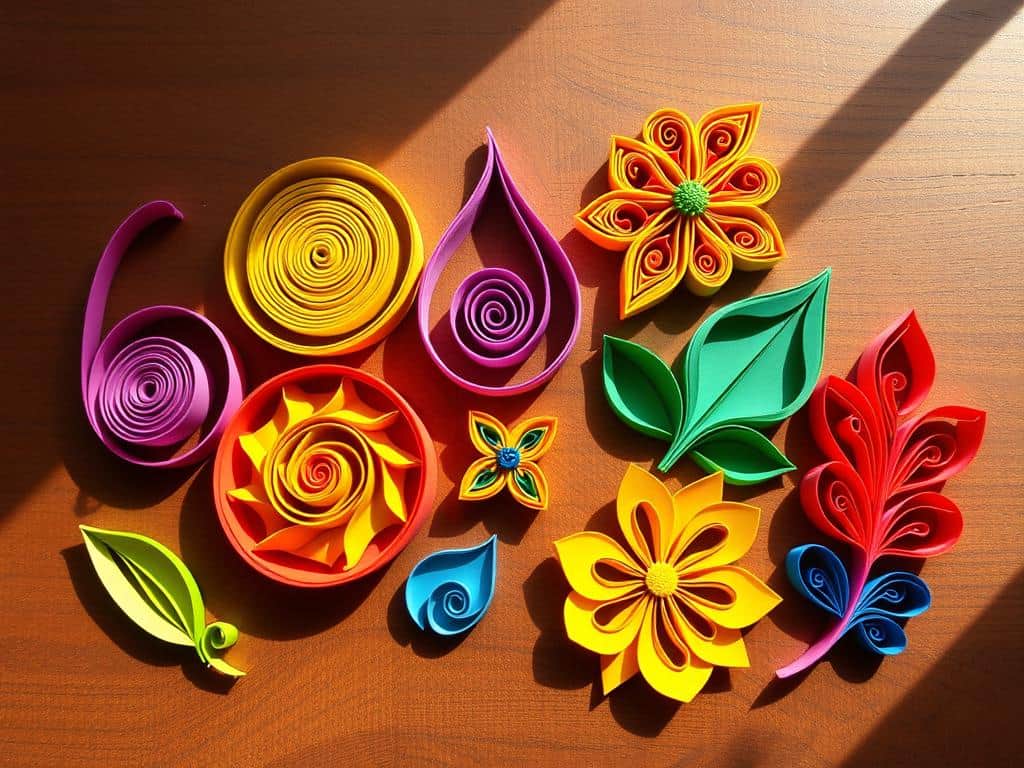
When I first discovered quilling, I was amazed by how simple paper strips could become stunning art. I started with a small kit from a local craft store. It had pre-cut paper strips.
I sat at my kitchen table, ready to create. With just a slotted tool and glue, I made my first coil. It felt exciting to see my creation come to life.
This craft let me explore quilling basics and enter a world of paper designs. I could make open coils and teardrop shapes. It was rewarding to see my skills improve and my creations become beautiful.
Key Takeaways
- Quilling is an inexpensive and accessible craft for all ages.
- Using 1/4″ wide quilling paper strips makes it easier for beginners.
- Standard quilling paper strips should be cut to a length of 8.5″.
- Beginners can create various shapes like teardrops, marquis, and stars.
- Utilizing a standard quilling kit helps start your journey easily.
- Visual learning resources, such as video tutorials, can enhance understanding.
Introduction to Quilling and Its Materials
Quilling is a fascinating paper art that involves rolling and shaping paper strips. It creates beautiful designs and patterns. This craft is perfect for people of all ages and skill levels, providing a calming creative outlet.
Learning the basics of quilling opens up a world of artistic possibilities. It encourages both relaxation and creativity.
What is Quilling?
Quilling is a paper craft that uses strips rolled into various shapes. These strips are about 3 mm wide and 30 cm long. They are easy to work with for different designs.
I start with simple shapes like teardrops, eyes, and leaves. These shapes help create stunning, three-dimensional designs. Knowing these basic shapes is key to making many designs.
Each quilling project, like a paper flower, takes about 30 minutes. This makes it a fun and engaging activity.
Essential Materials for Quilling
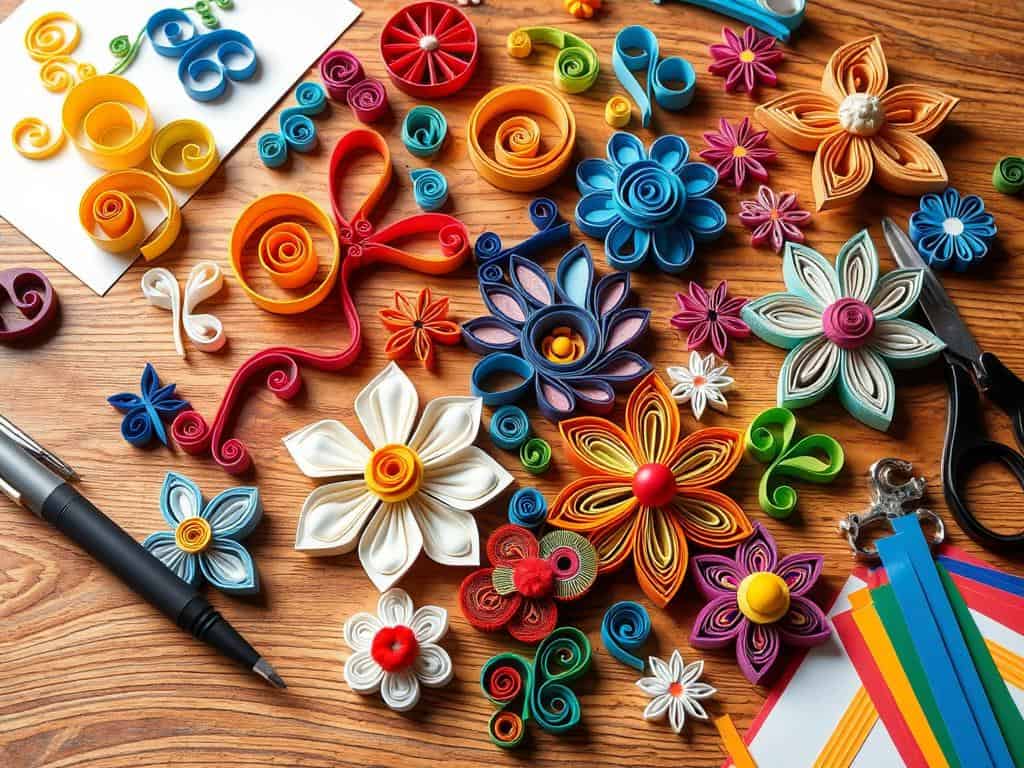
To get started with quilling, you need a few basic materials. These can be found in craft stores or online. A quilling kit usually includes paper strips, scissors, and a tool for rolling.
I also use a precision glue bottle for clean work. Starting with wider strips is easier. Using templates helps make shapes uniform.
Remember, use less glue than you think. This helps create neat and precise designs.
Quilling Techniques for Beginners
Starting with quilling means learning some basic techniques. These are the building blocks for beautiful designs. I find that mastering coil shapes is key. Tight and loose coils are the foundation of my designs.
Basic Coil Shapes
Learning to make different coil shapes is vital in quilling. For tight coils, I roll the paper tightly and glue it at the end. Loose coils let the paper expand a bit before gluing. These techniques lead to more complex shapes like teardrops and marquise.
Keeping my coils clean and precise is important. It makes my work look neat and professional.
Creating Intricate Designs
With coil shapes mastered, I move on to more detailed designs. I use tweezers for small details and a slotted tool for uniform coils. Planning my designs helps me avoid mistakes.
Techniques like pinching and curving add depth to my work. They turn simple shapes into stunning designs.
Combining Shapes to Form Patterns
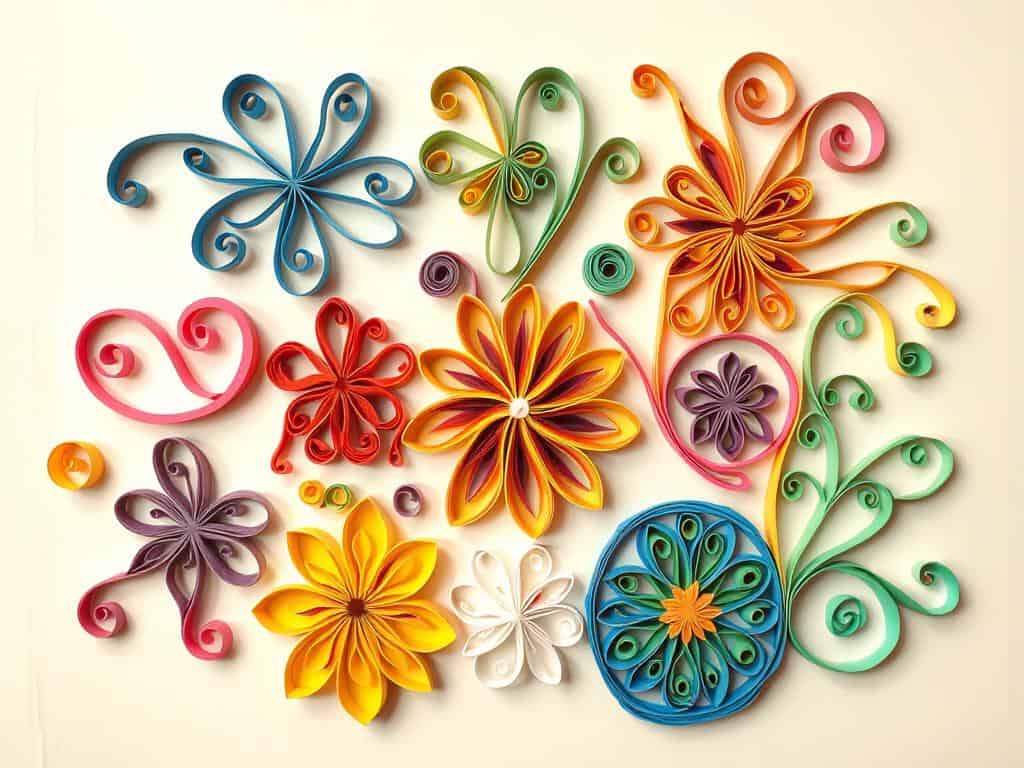
The magic of quilling is in mixing shapes to create patterns. I try out different shapes like squares and petals. Arranging them in a captivating way is my goal.
By experimenting with coils, I create unique embellishments. Nature and geometry inspire me to combine shapes beautifully. This results in a rich variety of patterns that show my creativity.
Conclusion
Starting my quilling journey was easy and fun. This guide showed me how to get good at the basics and what tools I need. I’ve found that quilling is more than just a hobby—it opens up a world of creativity.
With practice, I can make simple shapes into beautiful works of art. I’ve made things like cards, jewelry, and cool patterns. Some people find quilling calming, but it also teaches me patience, which is very valuable.
The skills and tools I’ve learned will help me with future projects. I’ve learned how to use affordable tools and improve my designs. This guide has not only prepared me but also made me excited to keep exploring quilling.