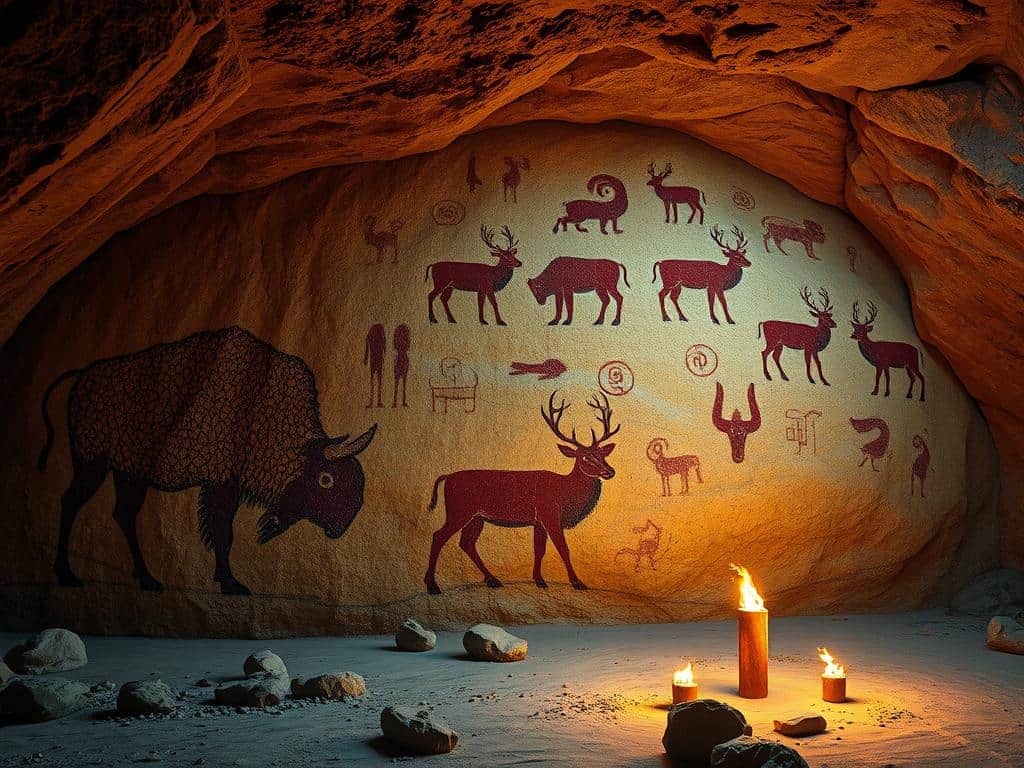
As a child, I visited the Lascaux caves in southern France. There, ancient cavemen left stunning paintings from the Magdalenian period. The dim light showed off vibrant colors of charcoal, red ochre, and yellow ochre.
It felt like I connected with those early artists. Their simple animal paintings were more than art. They were a way to communicate across time. This moment sparked my interest in art history and the key movements that shaped it.
The journey from prehistoric art to the Renaissance is deep. It shows how art has changed societies and cultures over millennia. Let’s explore this art movements timeline together, from ancient times to today’s innovations.
Key Takeaways
- The history of art spans from prehistoric cave paintings to modern digital forms.
- Ancient civilizations played a critical role in shaping artistic expression, reflecting their cultural values.
- The Renaissance era marked a significant rebirth of classical ideals, influencing subsequent art movements.
- Major periods highlight transformative styles and philosophies that redefine the evolution of art.
- Understanding art history allows us to appreciate the narratives behind various art movements.
The Evolution of Art Movements
Exploring the history of art movements shows the rich tapestry of human creativity. Art has changed over time, mirroring changes in society, technology, and culture. It starts with Prehistoric art, setting the stage for ancient art forms.
From Prehistoric to Ancient Art
Prehistoric art emerged around 40,000 to 4,000 B.C. It’s some of the earliest human expression. The Lascaux Cave paintings are a prime example, showing early artists’ use of images to tell stories.
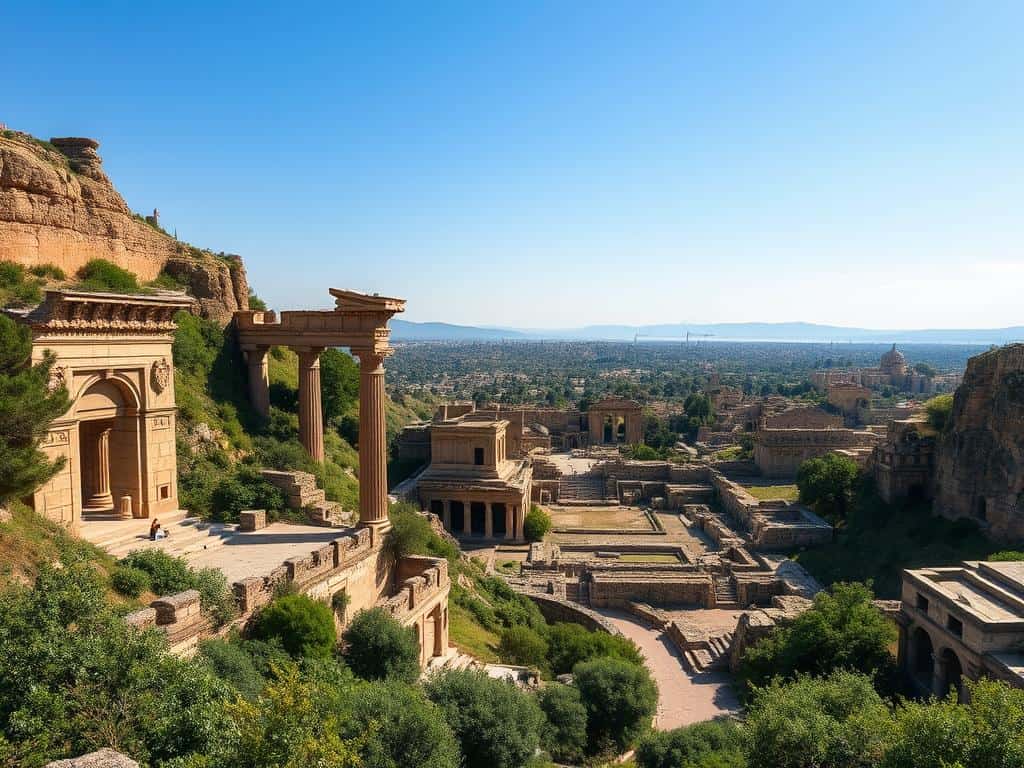
As humans progressed, ancient art emerged from 30,000 B.C. to A.D. 400. This period saw great art in places like Mesopotamia, Greece, and Egypt. Written language and religious practices greatly influenced their art.
The Importance of Ancient Civilizations
The impact of ancient civilizations on art is huge. Each culture brought its own style and techniques, shaping Western art history. Their art reflected civic identity, religious beliefs, and everyday life.
This art was both beautiful and practical. The roots of ancient art have inspired many future movements. It shows how art adapts as societies change.
Renaissance and Its Lasting Impact
The Renaissance lasted from the 14th to the 17th centuries. It was a time of great change in art, reshaping Europe and beyond. Artists turned back to ancient Greece and Rome’s classical ideals. They aimed to show the human experience with deep emotion and realism.
Rediscovery of Classical Ideals
During the Renaissance, classical ideals like balance and harmony came back. Artists sought knowledge, applying ancient philosophy to their work. New techniques, like perspective, allowed them to create depth and space never seen before.
The Role of Patrons in the Renaissance
Patrons played a big role in Renaissance art. Families like the Medici in Florence supported many artists. This allowed artists to focus on their work without worrying about money.
Patrons also used art to show their power and status. This fueled the art revolution of the time.
Influential Renaissance Artists
Many artists left a lasting mark during the Renaissance. Leonardo da Vinci and Michelangelo combined art and science in new ways. Da Vinci’s detailed studies of the human body led to incredibly realistic art.
Michelangelo’s sculptures and frescoes, like those in the Sistine Chapel, showed his skill in form and emotion. Raphael’s work, like “The School of Athens,” blended art and philosophy, adding to the era’s creativity.
Art History Through the Ages
Art history spans many periods, each with its own style. These styles show what society valued at the time. Notable artists played a big role in shaping these styles.
Major Periods and Their Characteristics
The journey starts with the Paleolithic Period, where art focused on survival. Then, the Mesolithic Period brought more abstract art as life improved. The Neolithic Period saw the rise of agriculture, leading to new tools and art forms.
In Mesopotamia, from 3500 to 331 BCE, amazing structures like ziggurats were built. These showed the society’s religious and political goals. Egyptian art, from 3200 to 1340 BCE, focused on the afterlife, with colorful depictions of gods.
Greek art, from 800 to 323 BCE, celebrated the human form through ceramics and sculptures. Roman art, from 800 BCE to 500 CE, featured grand architecture and frescoes. The Byzantine style, from 330 to 1453 CE, used abstraction and symbolism in churches.
Significant Artists and Their Contributions
The Gothic era, starting around 1200, brought soaring cathedrals and stunning stained glass. The Renaissance, from 1400 to 1600 CE, saw masterpieces by Leonardo da Vinci and Michelangelo. Baroque art, from 1600 to 1750 CE, was known for its emotional intensity.
Rococo art, from 1720 to 1770 CE, was ornate. Neoclassicism and Romanticism offered different views on art. Realism, from 1830 to 1870 CE, focused on true-to-life depictions. Impressionism, from 1870 to 1900 CE, emphasized light and color.
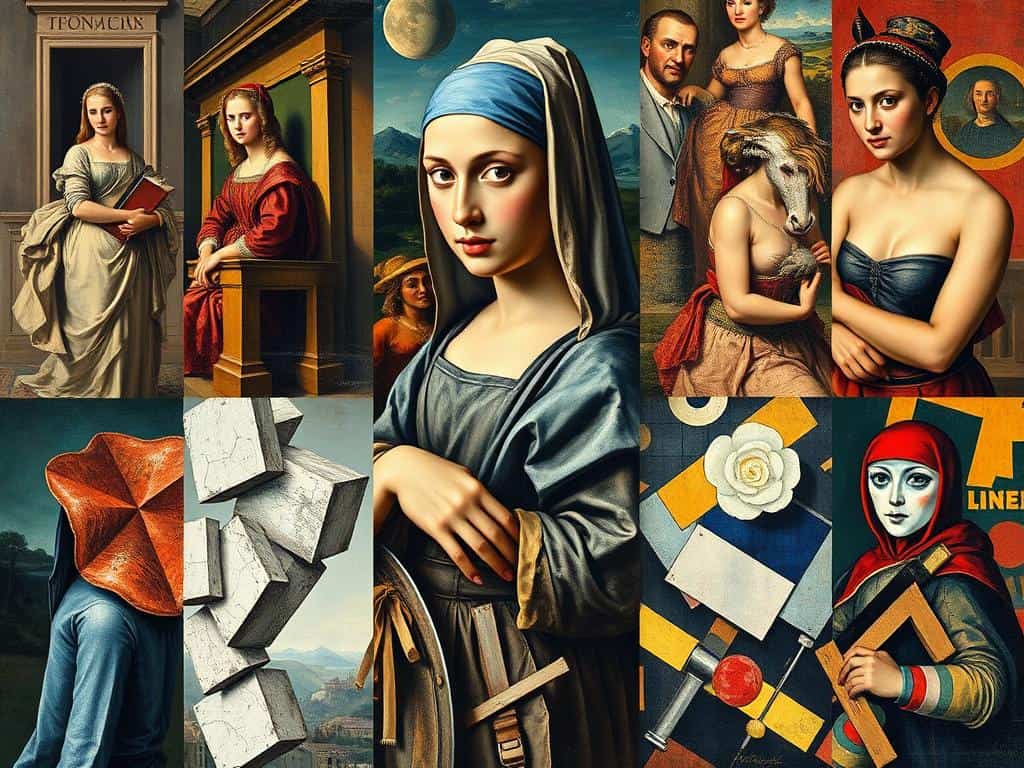
Conclusion
Looking back at art history, I see how it has deeply influenced both artists and viewers. It shows how old styles have grown and continue to shape today’s art. Each new style tells us about the changes in culture, economy, and politics.
The connection between art and its time is key to understanding its impact. For example, Romanticism emerged during a time of political upheaval. Impressionism, on the other hand, changed how artists were seen in society. These changes show how art mirrors our complex lives.
Exploring art history is more than just looking at pretty pictures. It’s about understanding our shared story. As I learn about different art movements, I see their lasting impact. This makes me value art more, seeing it as a way to connect with our humanity.