Last spring, I stood in my backyard surrounded by blooming flowers. I imagined turning their colors into fabric art. The sun was perfect, lighting up my materials: dried marigold petals and cochineal. I remembered the joy of my first DIY fabric dyeing, watching linen absorb natural dye colors.
With patience and creativity, ordinary materials became unique, colorful pieces. I learned to experiment with techniques like tie-dye and natural dyes. Each dyeing session was a journey of discovery and joy, celebrating color and expression.
Let’s explore seven amazing fabric dyeing techniques together!
Key Takeaways
- Experimenting with natural dyes can yield beautiful, unexpected colors.
- Different fabric types react uniquely to dye, influencing the final hue.
- Preparation is essential: scouring and mordanting improve color retention.
- Dyeing can be a fun, rewarding DIY project suited for all skill levels.
- Keep records of your dye experiments for future reference and refinement.
- Safety first: always use proper equipment and materials for dyeing.
Introduction to Fabric Dyeing Techniques
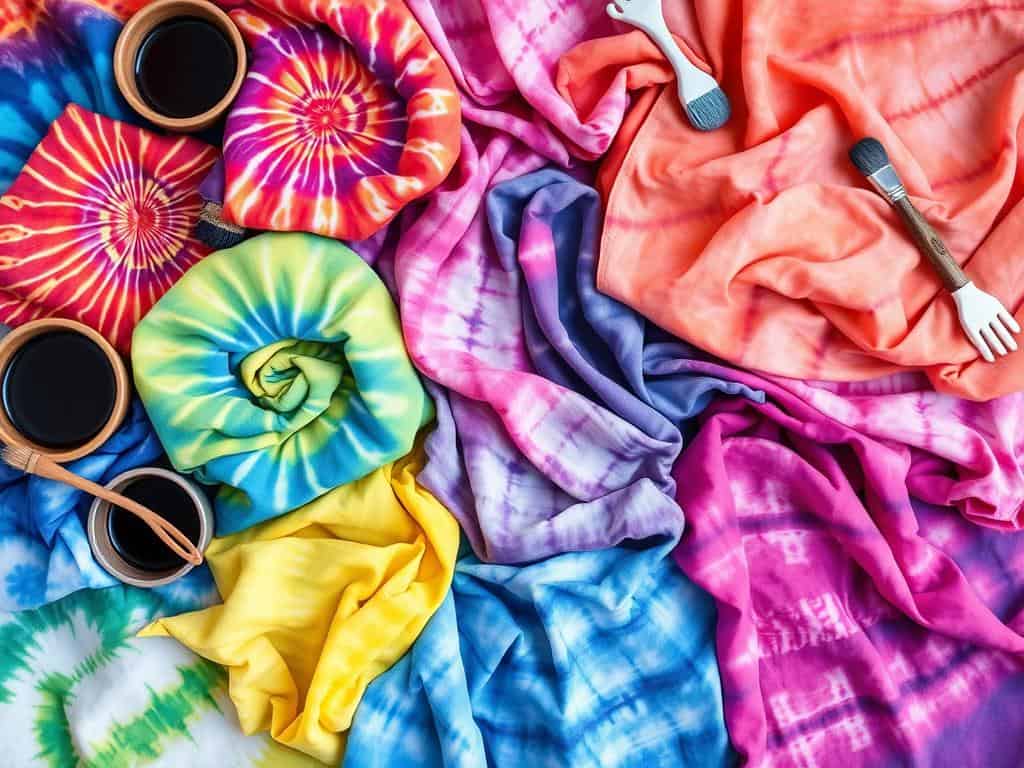
Fabric dyeing is an art that adds color to textiles, opening up endless creative possibilities. Learning about fabric dyeing techniques deepens my appreciation for this craft. Each method, whether synthetic or natural, helps create unique colors and patterns.
These techniques give each piece a special look, making it more beautiful. They change how the fabric looks and feels, making it stand out.
What is Fabric Dyeing?
Fabric dyeing is about adding color to materials like fibers and finished textiles. It turns simple fabrics into stunning works of art. As I learn more, I see how important it is to know different techniques.
Each method changes how the fabric looks and feels. It creates different effects that grab the viewer’s attention.
The Importance of Color in Fabric Art
Color is key in fabric art, affecting how we feel about the textiles. It can make us feel warm, calm, excited, or nostalgic. Knowing color theory helps me pick and mix colors to express my art.
This skill lets me use color to make my fabric art more beautiful and personal. It turns fabric into a canvas for my creativity.
Exploring Shibori Tie-Dye Techniques
Shibori tie-dye combines art and tradition in a unique way. It lets you create amazing designs on fabrics. I tried different methods and found it both fun and culturally rich.
Shibori Tie-Dye with Rubber Bands
Adding rubber bands to Shibori tie-dye makes for cool patterns. The tightness of the bands affects how the dye spreads. This leads to organic patterns that are truly unique.
Trying different folding styles or using corks for “Fireworks” patterns was exciting. Each new method revealed a world of possibilities in design.
Shibori Stitch Resist Technique
The stitch resist technique in Shibori lets you control your fabric art’s look. By stitching designs before dyeing, you get stunning results. Simple stitches can create textures, while detailed ones produce elaborate designs.
This method shows Shibori’s beauty. The thread acts as a resist, encouraging you to explore your creativity.
Shibori Pole Dyeing for Unique Patterns
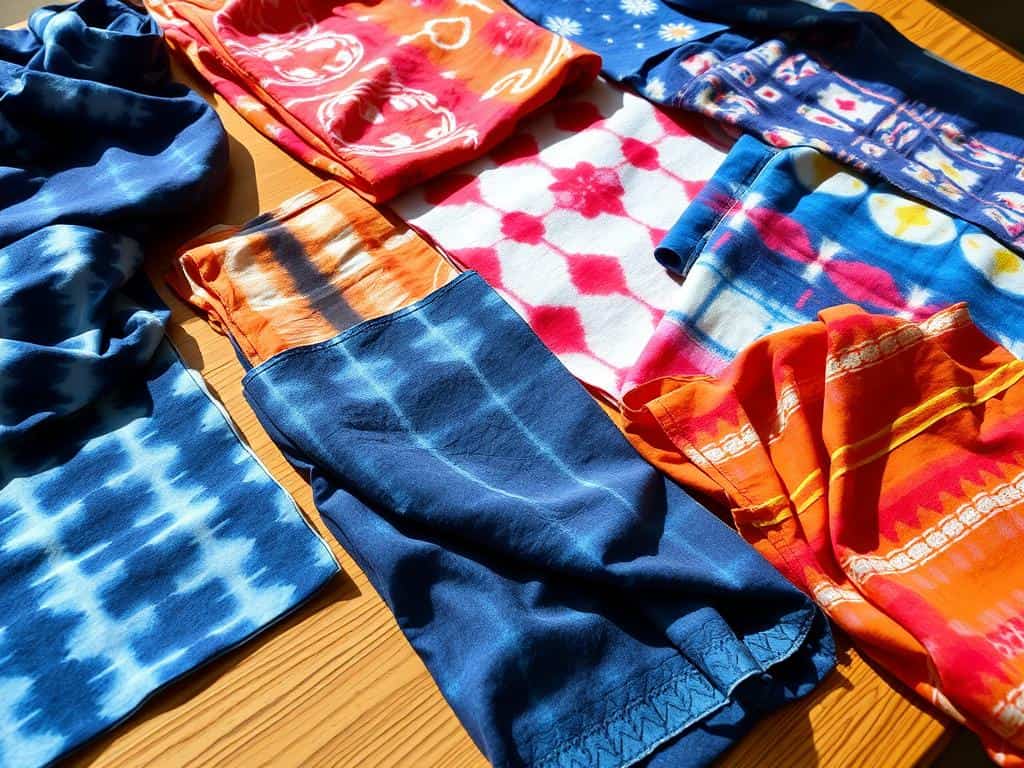
Pole dyeing in Shibori led to amazing striped patterns. You wrap fabric around a pole and apply dye in a way that creates layered effects. Playing with wrapping patterns and colors brings out innovative designs.
DIY Fabric Dyeing Techniques to Try at Home
Exploring DIY fabric dyeing lets me unleash my creativity. I can use different techniques to make unique fabric art. Here are three techniques that really caught my eye.
Ombre Dip Dyeing for Stunning Gradients
Ombre dip dyeing turns simple fabrics into stunning pieces. It involves slowly dipping fabric into dye, creating beautiful gradients. I can pick the colors and how they blend, making it great for clothes or decor.
The key is in how long you soak the fabric. It’s usually 5 to 15 minutes. This ensures the colors are just right, without overpowering the fabric.
No-Wax Batik for Creative Designs
No-wax batik is a fresh spin on traditional dyeing. It uses glue instead of wax, making it easy for beginners. By applying glue in patterns and dyeing over it, I get bold designs.
This method is simpler than traditional batik. It lets me show off my creativity without the hassle.
Low Water Immersion for Subtle Effects
Low water immersion is great for soft, subtle effects. By controlling the dye bath’s water, I get layered colors. This adds depth to my projects.
Using a large container with a bit of water helps me master this technique. The result is fabric art with a soft, stunning look.
Conclusion
Exploring fabric dyeing shows how we can express ourselves creatively. Techniques like Shibori and ombre create unique stories with fabric. These DIY methods let anyone explore their artistic side.
Natural dyeing adds even more possibilities for creativity. I’ve learned that practice and patience are key, even with plant-based dyes. Thanks to many resources and communities, each try brings me closer to mastering this craft.
My journey in fabric dyeing has changed how I see materials and techniques. It’s a path of learning, adapting, and enjoying the beauty of this ancient craft. I invite anyone interested in fabric dyeing to join the adventure!